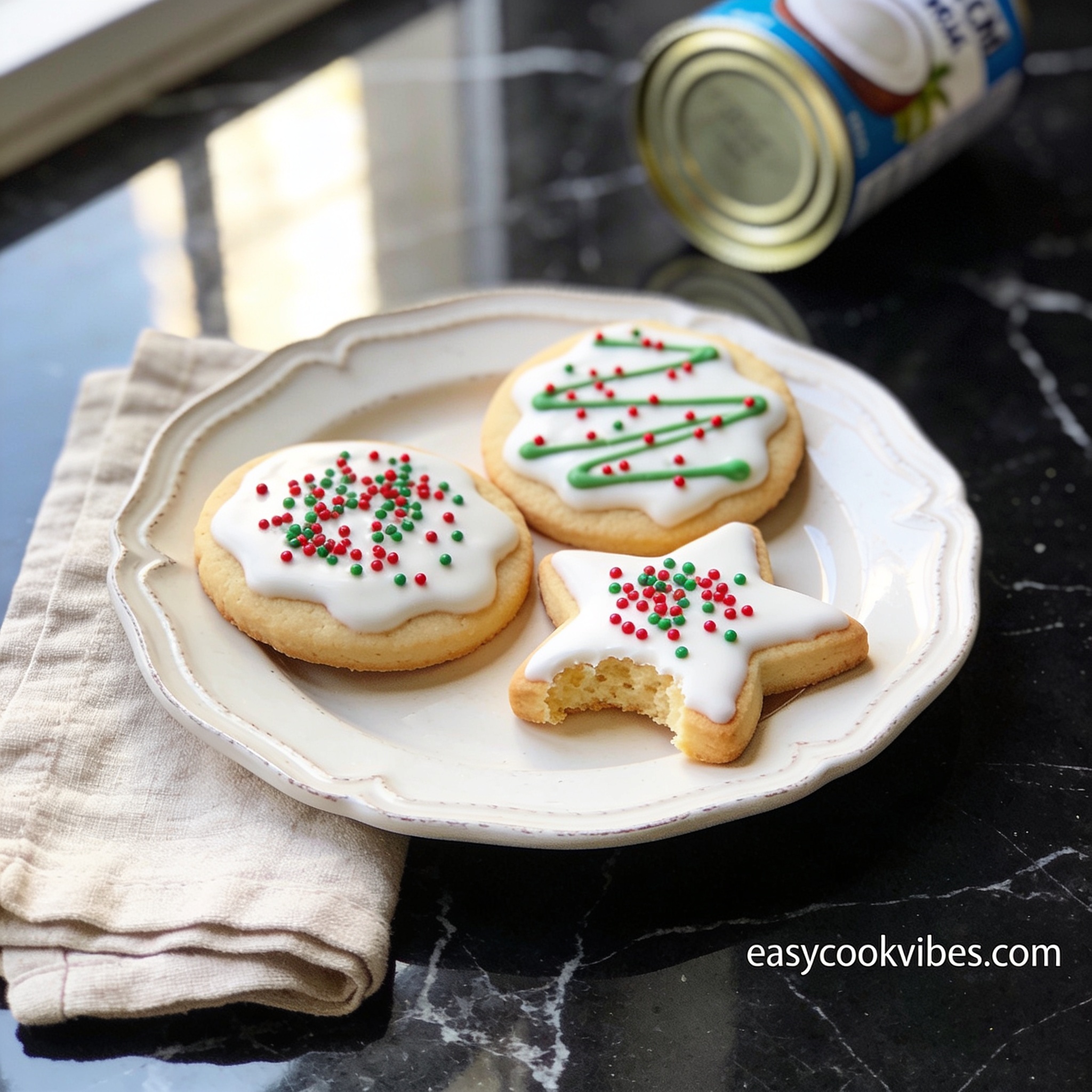
The Gluten Free Sugar Cookies You’ll Make Every Single Week
What Is gluten free sugar cookies with coconut milk?
Gluten free sugar cookies made with coconut milk are the dairy-free cookie hack I wish I’d discovered years ago when my niece was diagnosed with celiac disease and I had to figure out holiday baking fast. These aren’t the crumbly, dry cookies that break apart when you try to ice them. Instead, you get that classic roll-out cookie texture that holds its shape during baking and tastes like the real deal.
I spent three holiday seasons throwing away batches of gritty, sandy cookies before landing on this method. The secret isn’t some expensive specialty ingredient—it’s just using canned coconut milk instead of butter or regular milk. When my sister tasted these at our last family cookie swap, she didn’t believe they were gluten free sugar cookies until I showed her the empty coconut milk can. That moment convinced me that allergy-friendly baking doesn’t have to mean compromise. I’ve learned a lot about gluten free baking since then, from The Gluten Free Pizza Dough You’ll Make Every Single Week to these cookies, and the common thread is always finding the right fat and moisture balance.
Why Does This gluten free sugar cookies Recipe Actually Work?
Most gluten free sugar cookies turn out dry because they lack the fat structure that wheat flour provides. Using full-fat canned coconut milk instead of lite varieties provides better fat structure for gluten free sugar cookies, as the higher fat content (about 24g per 1/3 cup) helps create a more tender crumb and prevents the cookies from becoming dry or crumbly, which is a common challenge with gluten free baking. The coconut fat behaves differently than butter in the oven, creating a more stable cookie that doesn’t spread into blobs.
- Fat emulsion: The coconut milk fat coats the gluten free flour particles differently than oil, creating a more cohesive dough that rolls out without cracking
- Moisture retention: Coconut milk contains natural sugars and proteins that help gluten free sugar cookies retain moisture during baking instead of drying out in the oven’s heat
- Structure support: When chilled properly, the saturated fat in coconut milk firms up like butter, giving these gluten free sugar cookies clean edges when cut with cookie cutters
- Neutral flavor: Despite what you might expect, these don’t taste strongly of coconut—the vanilla and sugar shine through while the coconut milk just adds richness
- Dairy-free benefit: For anyone avoiding both gluten and dairy, these gluten free sugar cookies solve two dietary restrictions without requiring hard-to-find vegan butter substitutes
What You’ll Need
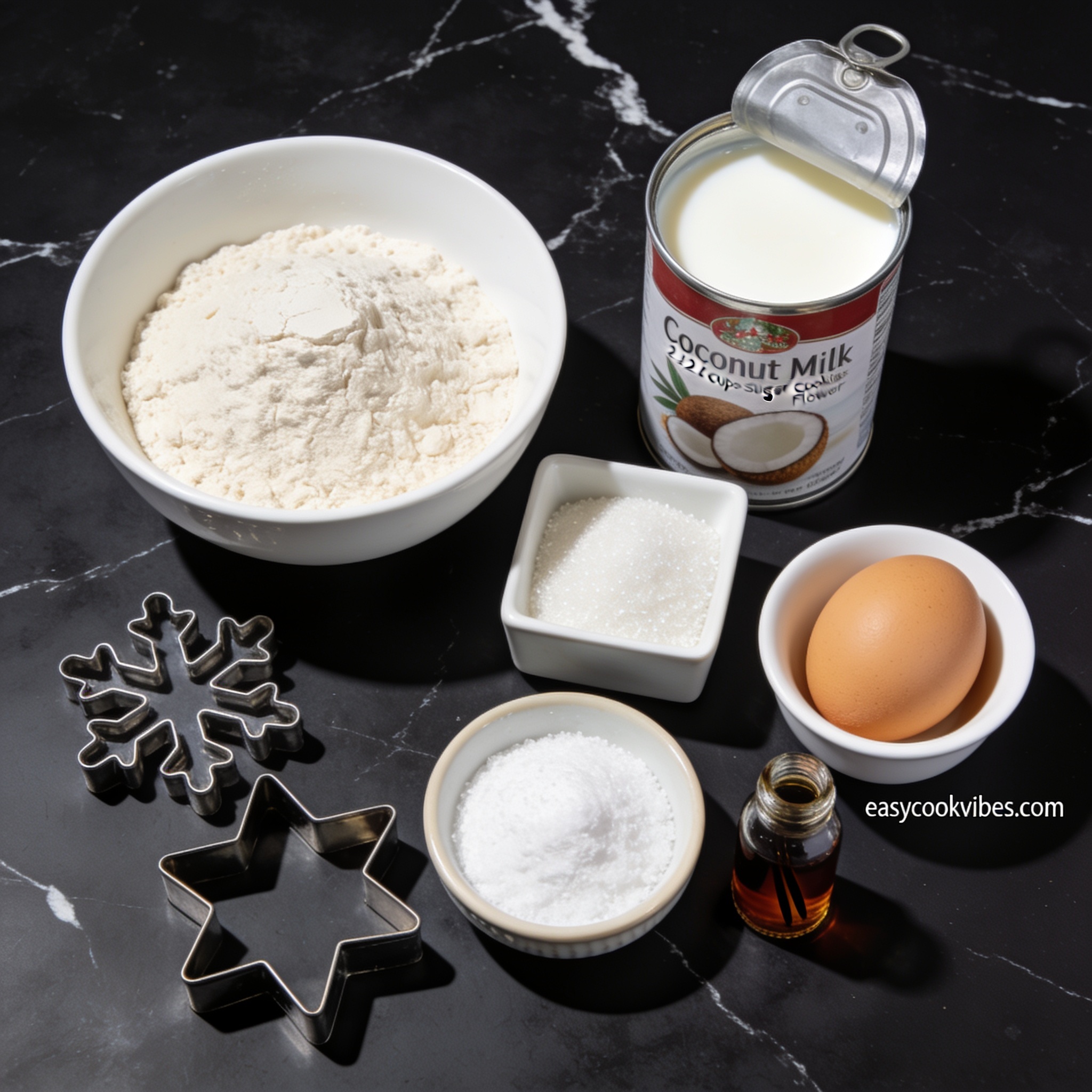
- 2 1/2 cups gluten free 1-to-1 baking flour blend (with xanthan gum)
- 1 cup full-fat canned coconut milk (solid cream portion only, about 2/3 cup)
- 3/4 cup granulated sugar
- 1/4 cup powdered sugar
- 1 large egg (or flax egg for vegan)
- 2 teaspoons vanilla extract
- 1/2 teaspoon almond extract
- 1 teaspoon baking powder
- 1/2 teaspoon salt
- Additional gluten free flour for rolling
The full-fat canned coconut milk is non-negotiable here. One gluten free sugar cookie made with coconut milk and gluten free flour blend contains approximately 120-140 calories, 18-22g carbohydrates, and 6-8g of sugar depending on the recipe and portion size, making them comparable to traditional sugar cookies but without the gluten or dairy. Don’t shake the can—scoop the thick cream from the top and save the watery liquid for smoothies. The flour blend matters too; look for one that contains xanthan gum already mixed in, or add 3/4 teaspoon if your blend doesn’t include it.
How to Make gluten free sugar cookies with coconut milk
Step 1: Cream the coconut cream and sugars
Scoop the solid white cream from the top of your chilled canned coconut milk into a large mixing bowl. You need about 2/3 cup of the thick cream—discard the clear liquid or save it for another use. Beat the coconut cream with the granulated sugar and powdered sugar using an electric mixer on medium speed for 3-4 minutes until the mixture looks fluffy and light, similar to creamed butter. This step is crucial because it incorporates air into the fat, which helps these gluten free sugar cookies rise properly and creates the tender texture you’re looking for.
Step 2: Mix the wet and dry ingredients separately
In a separate bowl, whisk together the gluten free flour blend, baking powder, and salt until well combined—this ensures the leavening agents distribute evenly so your gluten free sugar cookies don’t have bitter pockets of baking powder. Add the egg, vanilla extract, and almond extract to your creamed coconut mixture, beating until just combined. The almond extract might seem optional, but it adds a bakery-style depth that makes people ask for your secret ingredient.
Step 3: Form and chill the dough
Gradually add the dry ingredients to the wet mixture, mixing on low speed until a soft dough forms. It will be stickier than traditional sugar cookie dough—that’s normal. Divide the dough in half, shape each half into a flat disc, and wrap tightly in plastic wrap. Refrigerate for at least 2 hours or overnight; this hardens the coconut fat and prevents your gluten free sugar cookies from spreading into shapeless blobs during baking.
Step 4: Roll, cut, and bake until set
Preheat your oven to 350°F and line baking sheets with parchment paper. Dust your work surface generously with gluten free flour, then roll one disc of dough to 1/4-inch thickness—any thinner and the cookies get crispy, any thicker and they won’t cook through. Dip your cookie cutters in flour before cutting to prevent sticking, then transfer cut shapes to the prepared sheets with a metal spatula. Bake these gluten free sugar cookies for 10-12 minutes until the edges look set but the centers still appear slightly soft; they firm up as they cool.
What Makes This gluten free sugar cookies Different?
Traditional gluten free sugar cookies often rely on butter substitutes that either make the dough too soft or create a greasy mouthfeel. The coconut milk cream provides saturated fat that behaves almost identically to butter when cold, giving you clean edges on your cutouts without the dairy.
- Chilling is mandatory: Unlike wheat dough, these gluten free sugar cookies must be cold when they hit the oven or the coconut fat melts too fast, causing spreading
- Don’t overbake: They should look slightly underdone when you pull them out; gluten free flour continues to cook from residual heat and overbaked cookies turn rock hard
- Measure flour correctly: Spoon the gluten free flour into your measuring cup and level it off—packed flour makes dense, heavy gluten free sugar cookies
- Room temperature matters: Let the baked cookies cool completely on the pan for 5 minutes before moving to a rack; they’re fragile when hot
How to Store and Reheat
Store cooled gluten free sugar cookies in an airtight container at room temperature for up to 3 days. If you’ve decorated them with icing, place a sheet of parchment paper between layers to prevent sticking. For longer storage, freeze the baked cookies in a single layer on a baking sheet, then transfer to a freezer bag where they’ll keep for 2 months. Thaw frozen gluten free sugar cookies at room temperature for 30 minutes—don’t microwave them or the texture turns rubbery.
Can You Make gluten free sugar cookies with coconut milk Ahead of Time?
Yes, and I recommend it. The dough keeps beautifully in the refrigerator for up to 3 days wrapped tightly in plastic. You can also freeze the dough discs for up to 3 months; thaw overnight in the fridge before rolling. If you want fresh-baked gluten free sugar cookies for a party, roll and cut the shapes, freeze them on the baking sheet, then transfer the frozen cutouts to a bag. Bake straight from frozen, adding 2-3 extra minutes to the baking time.
Variations Worth Trying
- Lemon Glazed: Replace the almond extract with lemon extract and add 1 tablespoon lemon zest to the dough; top with a simple powdered sugar and lemon juice glaze after cooling
- Chocolate Dipped: Melt 1 cup dairy-free chocolate chips with 1 teaspoon coconut oil, dip half of each cooled cookie, and place on parchment to set
- Sprinkle Topped: Press natural colored sprinkles into the dough before baking—these gluten free sugar cookies look festive without additional icing
- Spiced Sugar: Add 1 teaspoon cinnamon and 1/4 teaspoon nutmeg to the dry ingredients for a warm holiday version that pairs with hot cider
What to Serve With gluten free sugar cookies with coconut milk?
- Hot spiced tea: The vanilla notes in these gluten free sugar cookies complement chai or cinnamon tea perfectly
- Fresh berries: A bowl of strawberries or raspberries cuts through the sweetness and adds color to your dessert plate
- Coconut whipped cream: Keep the dairy-free theme going with a dollop of whipped coconut cream and fresh mint
- Almond milk latte: The nuttiness pairs with the subtle almond extract in the cookies
Frequently Asked Questions About gluten free sugar cookies with coconut milk
Do gluten free sugar cookies with coconut milk taste like coconut?
Not strongly. While there is a subtle hint of coconut flavor, the vanilla and almond extracts mask most of it, and the sugar dominates the palate. If you’re very sensitive to coconut flavor, you can use refined coconut oil instead of coconut milk, though the texture changes slightly.
Can I use canned coconut milk instead of carton coconut milk in gluten free sugar cookies?
You should use canned, not carton. Carton coconut milk is too thin and watered down for this recipe. The canned full-fat version provides the necessary fat structure that makes these gluten free sugar cookies tender rather than crispy or crumbly.
What gluten free flour blend works best for sugar cookies with coconut milk?
Look for a 1-to-1 baking blend that contains xanthan gum, such as Bob’s Red Mill or King Arthur Measure for Measure. Avoid single-ingredient flours like almond flour or coconut flour—they won’t provide the structure needed for roll-out gluten free sugar cookies.
How do I prevent gluten free sugar cookies from spreading when using coconut milk?
Chill the dough for at least 2 hours before rolling, and make sure your baking sheets aren’t warm when you place the cutouts on them. If your kitchen is hot, chill the cut shapes on the baking sheet in the freezer for 10 minutes before baking.
Can I freeze gluten free sugar cookies made with coconut milk?
Both the dough and baked cookies freeze well. Wrap dough discs tightly and freeze up to 3 months, or freeze baked cookies in an airtight container with parchment between layers for up to 2 months. Thaw either at room temperature without unwrapping to prevent condensation from making them soggy.
These gluten free sugar cookies have become my go-to recipe for school parties, holiday gifts, and any time I need a treat that works for multiple dietary needs. I hope they solve your baking challenges the way they solved mine. Give them a try this weekend and let me know how they turn out.

Gluten Free Sugar Cookies with Coconut Milk
Dairy-free roll-out sugar cookies made with coconut milk instead of butter. These gluten free sugar cookies hold their shape perfectly for cutouts and stay tender for days.
Ingredients
- 2 1/2 cups gluten free 1-to-1 baking flour blend (with xanthan gum)
- 1 cup full-fat canned coconut milk (solid cream only, about 2/3 cup)
- 3/4 cup granulated sugar
- 1/4 cup powdered sugar
- 1 large egg
- 2 teaspoons vanilla extract
- 1/2 teaspoon almond extract
- 1 teaspoon baking powder
- 1/2 teaspoon salt
- Additional gluten free flour for rolling
Instructions
- 1. Scoop the solid white cream from the top of chilled canned coconut milk into a large mixing bowl. Beat with granulated sugar and powdered sugar using an electric mixer on medium speed for 3-4 minutes until fluffy and light.
- 2. In a separate bowl, whisk together gluten free flour blend, baking powder, and salt. Add egg, vanilla extract, and almond extract to the creamed coconut mixture, beating until just combined.
- 3. Gradually add dry ingredients to wet mixture, mixing on low until a soft dough forms. Divide dough in half, shape into flat discs, wrap tightly in plastic wrap, and refrigerate for at least 2 hours or overnight.
- 4. Preheat oven to 350°F and line baking sheets with parchment paper. Roll dough to 1/4-inch thickness on a floured surface, cut with cookie cutters, and transfer to prepared sheets. Bake for 10-12 minutes until edges are set but centers appear slightly soft. Cool on pan for 5 minutes before transferring to wire rack.
Notes
- Use only the solid cream from the top of the canned coconut milk, not the liquid.
- Dough must be chilled for at least 2 hours to prevent spreading.
- For vegan version, substitute flax egg (1 tablespoon flaxseed meal + 3 tablespoons water).
- Cookies keep at room temperature for 3 days or freeze for up to 2 months.