Simple Is Best Stuffing
There is something so comforting about a pan of warm stuffing coming out of the oven, all golden on top and soft underneath. The smell alone feels like a kitchen memory, buttery onions, celery, herbs, and toasted bread all mingling together in that cozy way that makes everyone drift toward the table before dinner is even ready.
This is the kind of side dish that does not need a dozen fancy add-ins to shine. Trust me, you’re going to love this because it keeps the focus right where it belongs, on tender bread cubes, savory herbs, and that crisp, golden finish that makes every spoonful worth going back for.
Why This Cozy Classic Always Works
The beauty of this dish is how simple it feels while still tasting like something special. It is humble, yes, but not boring. The butter gives richness, the vegetables add gentle sweetness, and the herbs bring everything together with that familiar holiday aroma.
And now let’s dive a little deeper into why this pan of stuffing has stayed on so many family tables for generations.
A Little Story Behind This Holiday Favorite
Stuffing has been part of home cooking for centuries, showing up in different forms across many cultures. In American kitchens, bread-based versions became especially popular because they made smart use of day-old bread while stretching a meal into something heartier.
Over time, families started adding their own touches, sausage here, apples there, nuts in some homes, but the simplest version never lost its charm. This one keeps that old-fashioned spirit alive with bread, butter, onion, celery, and herbs doing all the heavy lifting.
The Reasons This Recipe Deserves a Spot on Your Table
Before we start chopping and stirring, let me tell you why this recipe is such a keeper. It is dependable, cozy, and forgiving, which is exactly what you want when the oven is full and the kitchen is busy.
Versatile: This stuffing works for Thanksgiving, Sunday dinner, roasted chicken night, or any meal that needs a warm and savory side.
Budget-Friendly: It uses everyday ingredients like bread, celery, onion, broth, and eggs, so it feels special without being expensive.
Quick and Easy: The prep is simple, and once everything is mixed, the oven does most of the work.
Customizable: You can adjust the herbs, use different bread, or make it a little softer or crispier depending on your family’s taste.
Crowd-Pleasing: The flavors are familiar, buttery, and cozy, which makes it easy for guests of all ages to enjoy.
Make-Ahead Friendly: You can cube the bread and chop the vegetables ahead, which makes cooking day much calmer.
Great for Leftovers: Leftover stuffing reheats beautifully and can be turned into breakfast skillets, savory patties, or cozy casseroles.
Chef Tips for Getting That Perfect Bite
Now that you know why this one’s a total game-changer, let’s talk about the small kitchen details that make it extra good. These are the little moves that turn basic ingredients into something golden, tender, and full of flavor.
- Use dry bread, not fresh soft bread, because dry cubes soak up broth without turning mushy.
- Cook the onion and celery in butter until soft and fragrant, since this builds the base flavor.
- Add broth gradually, because some bread absorbs liquid faster than others.
- Cover the dish first, then uncover near the end so the center stays moist and the top gets crisp.
- Let it rest for a few minutes before serving so the texture settles nicely.
The Kitchen Tools That Make It Easier
Before the bread meets the butter, gather your tools so the process feels smooth and relaxed. Nothing fancy is needed, just a few reliable basics.
Large Skillet: This is for cooking the onion and celery until soft, buttery, and fragrant.
Large Mixing Bowl: You need enough room to gently toss the bread with the vegetables, herbs, broth, and eggs.
9×13-Inch Baking Dish: This gives the stuffing enough space to cook evenly with a crisp top.
Measuring Cups and Spoons: These help keep the broth, herbs, and seasoning balanced.
Foil: Covering the dish at the start keeps the inside moist before the top browns.
Ingredients You Will Need for the Best Simple Stuffing
The magic here comes from how these simple ingredients work together. The bread soaks up the savory broth, the vegetables melt into the butter, and the herbs make the whole kitchen smell like a holiday.
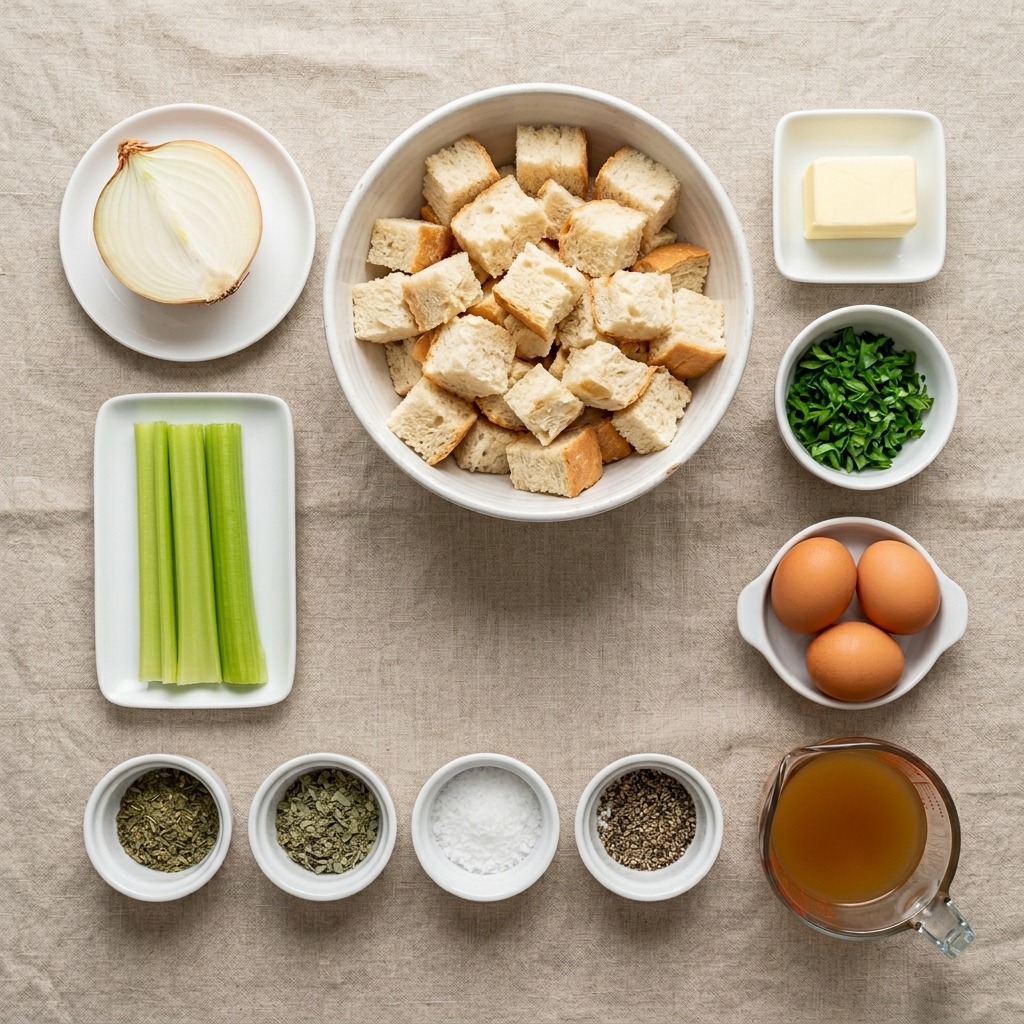
- Day-old white bread cubes: 12 cups, cut into 1-inch pieces. Dry bread gives the best texture because it absorbs flavor without falling apart.
- Unsalted butter: 3/4 cup. Butter adds richness and helps soften the vegetables.
- Yellow onion: 2 cups, finely chopped. Onion brings gentle sweetness and savory depth.
- Celery: 2 cups, finely chopped. Celery adds freshness, light crunch, and classic flavor.
- Fresh parsley: 1/2 cup, chopped. Parsley brightens the stuffing and balances the richness.
- Dried sage: 2 teaspoons. Sage gives that warm, classic stuffing aroma.
- Dried thyme: 1 teaspoon. Thyme adds earthy flavor that works beautifully with the bread and broth.
- Kosher salt: 1 1/2 teaspoons. Salt brings all the flavors forward.
- Black pepper: 1 teaspoon. Pepper adds a little warmth without overpowering the dish.
- Low-sodium vegetable broth: 2 1/2 cups. Broth moistens the bread and adds savory flavor.
- Large eggs: 2, beaten. Eggs help bind the stuffing so it slices and scoops nicely.
Easy Ingredient Swaps That Still Taste Wonderful
If your pantry looks a little different, no worries. This recipe is flexible enough to handle a few simple changes while still keeping that cozy flavor.
White bread: Use sourdough, French bread, or a country loaf for a deeper flavor.
Unsalted butter: Use salted butter, but reduce the added salt slightly.
Yellow onion: Use sweet onion for a milder taste.
Fresh parsley: Use 2 tablespoons dried parsley if fresh is not available.
Low-sodium vegetable broth: Use chicken broth if you do not need the recipe to stay vegetarian.
Dried sage: Use poultry seasoning for a more rounded holiday-style flavor.
The Ingredients That Carry the Flavor
Some ingredients quietly do most of the work, and in this recipe, the bread and herbs are the real stars. They make the texture and aroma feel like home.
Day-old Bread: Dry bread is the secret to stuffing that is tender but not soggy. It drinks in the buttery broth while keeping enough structure for a lovely bite.
Sage: This herb gives the dish its cozy, nostalgic flavor. A little goes a long way, and it makes the whole pan smell incredible.
Let’s Bring This Cozy Dish Together
And now we get to the good part. Once the vegetables start sizzling in butter, the kitchen smells like something special is definitely happening. Here are the steps you’re going to follow.
- Preheat Your Equipment: Preheat the oven to 350°F. Lightly grease a 9×13-inch baking dish so the stuffing lifts out easily after baking.
- Combine Ingredients: Place the bread cubes in a large mixing bowl. In a large skillet, melt the butter over medium heat, then add the onion and celery. Cook for 8 to 10 minutes, stirring often, until softened and fragrant. Stir in the parsley, sage, thyme, salt, and pepper.
- Prepare Your Cooking Vessel: Pour the buttery vegetable mixture over the bread cubes. Gently toss so the bread is coated with the herbs and butter.
- Assemble the Dish: Whisk the broth and beaten eggs together in a separate bowl. Pour the mixture over the bread a little at a time, tossing gently until evenly moistened. Transfer everything to the prepared baking dish and spread it into an even layer.
- Cook to Perfection: Cover the dish with foil and bake for 30 minutes. Remove the foil and bake for another 15 minutes, until the top is golden and lightly crisp.
- Finishing Touches: Let the stuffing rest for 10 minutes before serving. This helps the texture settle and makes each scoop hold together better.
- Serve and Enjoy: Spoon it warm onto plates beside roasted vegetables, turkey, chicken, or your favorite holiday mains. Let me tell you, it’s worth every bite.
How the Texture and Flavor Come Together
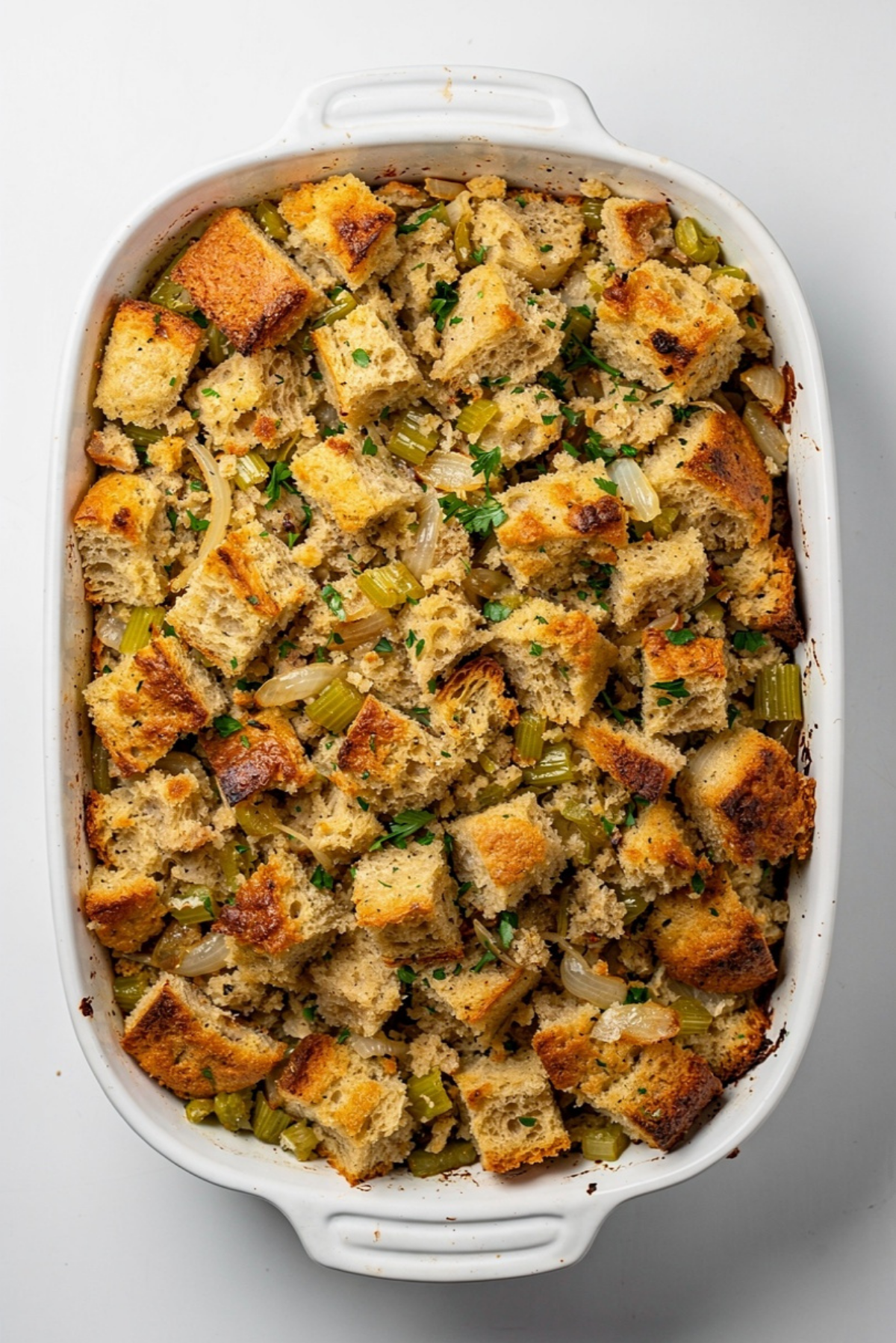
The best part of this dish is the contrast. The top gets golden and crisp, while the inside stays soft, buttery, and tender. Each bite has a little crunch, a little fluffiness, and that savory herb flavor that keeps you going back for more.
As it bakes, the broth steams through the bread while the eggs help bind everything gently. The celery and onion mellow into the background, adding sweetness and aroma without stealing the show.
Cooking Tips That Make a Big Difference
Once you make stuffing a few times, you start to feel what it needs. Until then, these little tips will help you get it just right.
- Dry the bread well: If your bread is still soft, toast the cubes in a low oven before mixing.
- Do not rush the vegetables: Softened onion and celery give better flavor than barely cooked vegetables.
- Check moisture before baking: The bread should feel damp but not soaked.
- Use foil at first: This keeps the center moist before the top gets its golden finish.
Common Mistakes to Avoid for Better Stuffing
Stuffing is simple, but a few small missteps can change the texture. The good news is that each one is easy to fix.
- Using fresh bread: Fresh bread can turn gummy, so dry it out first.
- Adding too much broth at once: Pour slowly and toss as you go so you can stop when the texture feels right.
- Skipping the rest time: Resting helps the stuffing hold together and taste more balanced.
- Overbaking uncovered: Too much uncovered time can make the top dry instead of crisp.
Cozy Nutrition Details
Servings: 10
Calories per serving: 285
Note: These are approximate values.
Timing Made Simple
Prep Time: 20 minutes
Cook Time: 45 minutes
Total Time: 1 hour 5 minutes
Make-Ahead and Storage Tips
This is one of those dishes that can save you stress when you plan ahead. You can cube the bread a day or two early and leave it loosely covered at room temperature to dry out.
You can also chop the onion and celery the day before, then store them in the fridge. Leftovers should be cooled and placed in an airtight container, then refrigerated for up to 4 days. To freeze, wrap portions tightly and freeze for up to 2 months. Reheat covered in a 325°F oven until warmed through, adding a splash of broth if it looks dry.
Delicious Ways to Serve It
This stuffing loves classic pairings. Serve it with roasted turkey, chicken, mashed potatoes, green beans, cranberry sauce, or roasted carrots. It also works beautifully beside vegetarian mains like stuffed squash or mushroom gravy.
For a cozy casual meal, spoon it into a bowl with roasted vegetables and a drizzle of warm gravy. Simple, comforting, and honestly so satisfying.
Creative Leftover Transformations
Leftovers might be even more fun the next day. Press chilled stuffing into small patties and pan-sear them until crisp. Add them to a breakfast plate with eggs, or tuck them into a leftover holiday sandwich.
You can also scatter leftovers over a vegetable casserole before baking, or mix them with roasted mushrooms for a quick savory skillet dinner.
Extra Little Tips for Fresh Flavor
A sprinkle of fresh parsley right before serving adds color and brightness. If the stuffing tastes a little flat after reheating, add a tiny splash of broth and a pinch of salt.
For the best texture, avoid packing the mixture too tightly into the baking dish. A lighter layer lets the edges crisp while the middle stays soft.
Make It a Showstopper on the Table
For a pretty presentation, serve it in a white or cream baking dish so the golden top really stands out. Add a little chopped parsley over the top after baking, but keep it simple and clean.
If you want extra crisp edges, bake it in a slightly wider dish. More surface area means more golden bites, and nobody ever complains about that.
Variations to Try
- Herby Mushroom Version: Add 2 cups sautéed chopped mushrooms for a deeper, earthier flavor.
- Apple Celery Twist: Add 1 cup diced apple for gentle sweetness and a little freshness.
- Cornbread Style: Replace half the white bread with dried cornbread cubes for a slightly sweet, crumbly texture.
- Garlic Herb Version: Add 3 minced garlic cloves to the skillet with the onion and celery.
- Extra Crispy Top: Dot the top with 2 tablespoons butter before uncovering for the final bake.
FAQ’s
Q1: Can I use fresh bread?
A1: You can, but it needs to be dried first. Toast the cubes in a 300°F oven for 20 to 25 minutes, then let them cool before using.
Q2: Can I make this stuffing ahead of time?
A2: Yes. Assemble it up to one day ahead, cover it tightly, and refrigerate. Bake it when ready, adding a few extra minutes if it is cold from the fridge.
Q3: How do I know if I added enough broth?
A3: The bread should feel evenly damp but not soggy. If there is liquid pooling in the bowl, you have added too much.
Q4: Can I make it vegetarian?
A4: Yes, this version already uses vegetable broth, so it works well as a vegetarian side.
Q5: Why is my stuffing dry?
A5: It may need more broth, or it may have baked uncovered too long. Add a splash of warm broth when reheating.
Q6: Why is my stuffing mushy?
A6: The bread may have been too fresh or too much broth was added. Use dry bread and pour the liquid gradually next time.
Q7: Can I add more herbs?
A7: Absolutely. Add a little rosemary or extra thyme if you like a stronger herb flavor.
Q8: Can I bake this in a smaller dish?
A8: Yes, but it may be thicker and need a few more minutes in the oven. The top may also be less crisp.
Q9: Can I freeze leftovers?
A9: Yes. Freeze cooled portions in airtight containers for up to 2 months, then reheat with a splash of broth.
Q10: What makes this different from dressing?
A10: The names are often used differently depending on region. Since this version is baked in a dish, many people also call it dressing.
Conclusion
Simple Is Best Stuffing proves that cozy food does not need to be complicated. With buttery vegetables, tender bread, warm herbs, and a golden crisp top, it brings that familiar homemade feeling to the table every single time. Make it once, and it just might become the side dish everyone asks for again next year.
Print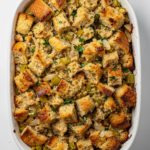
Simple Is Best Stuffing
- Total Time: 1 hour 5 minutes
- Yield: 10 servings
- Diet: Vegetarian
Description
A cozy classic stuffing made with day-old bread, buttery onion and celery, warm herbs, vegetable broth, and eggs, baked until tender inside and golden on top.
Ingredients
- 12 cups day-old white bread cubes, cut into 1-inch pieces
- 3/4 cup unsalted butter
- 2 cups yellow onion, finely chopped
- 2 cups celery, finely chopped
- 1/2 cup fresh parsley, chopped
- 2 teaspoons dried sage
- 1 teaspoon dried thyme
- 1 1/2 teaspoons kosher salt
- 1 teaspoon black pepper
- 2 1/2 cups low-sodium vegetable broth
- 2 large eggs, beaten
Instructions
- Preheat the oven to 350°F and lightly grease a 9×13-inch baking dish.
- Place the bread cubes in a large mixing bowl.
- Melt the butter in a large skillet over medium heat. Add the onion and celery, then cook for 8 to 10 minutes, stirring often, until softened and fragrant.
- Stir in the parsley, sage, thyme, salt, and black pepper.
- Pour the buttery vegetable mixture over the bread cubes and toss gently to coat.
- Whisk the vegetable broth and beaten eggs together in a separate bowl.
- Pour the broth mixture over the bread a little at a time, tossing gently until evenly moistened.
- Transfer the mixture to the prepared baking dish and spread it into an even layer.
- Cover with foil and bake for 30 minutes.
- Remove the foil and bake for another 15 minutes, until the top is golden and lightly crisp.
- Let the stuffing rest for 10 minutes before serving warm.
Notes
- Use dry bread cubes for the best texture.
- Add broth gradually so the stuffing does not become soggy.
- For a crispier top, bake in a wider dish.
- Reheat leftovers with a splash of broth if they seem dry.
- Prep Time: 20 minutes
- Cook Time: 45 minutes
- Category: Side Dish
- Method: Baking
- Cuisine: American
Nutrition
- Serving Size: 1 serving
- Calories: 285
- Sugar: 4g
- Sodium: 510mg
- Fat: 16g
- Saturated Fat: 9g
- Unsaturated Fat: 6g
- Trans Fat: 0g
- Carbohydrates: 30g
- Fiber: 3g
- Protein: 7g
- Cholesterol: 75mg