
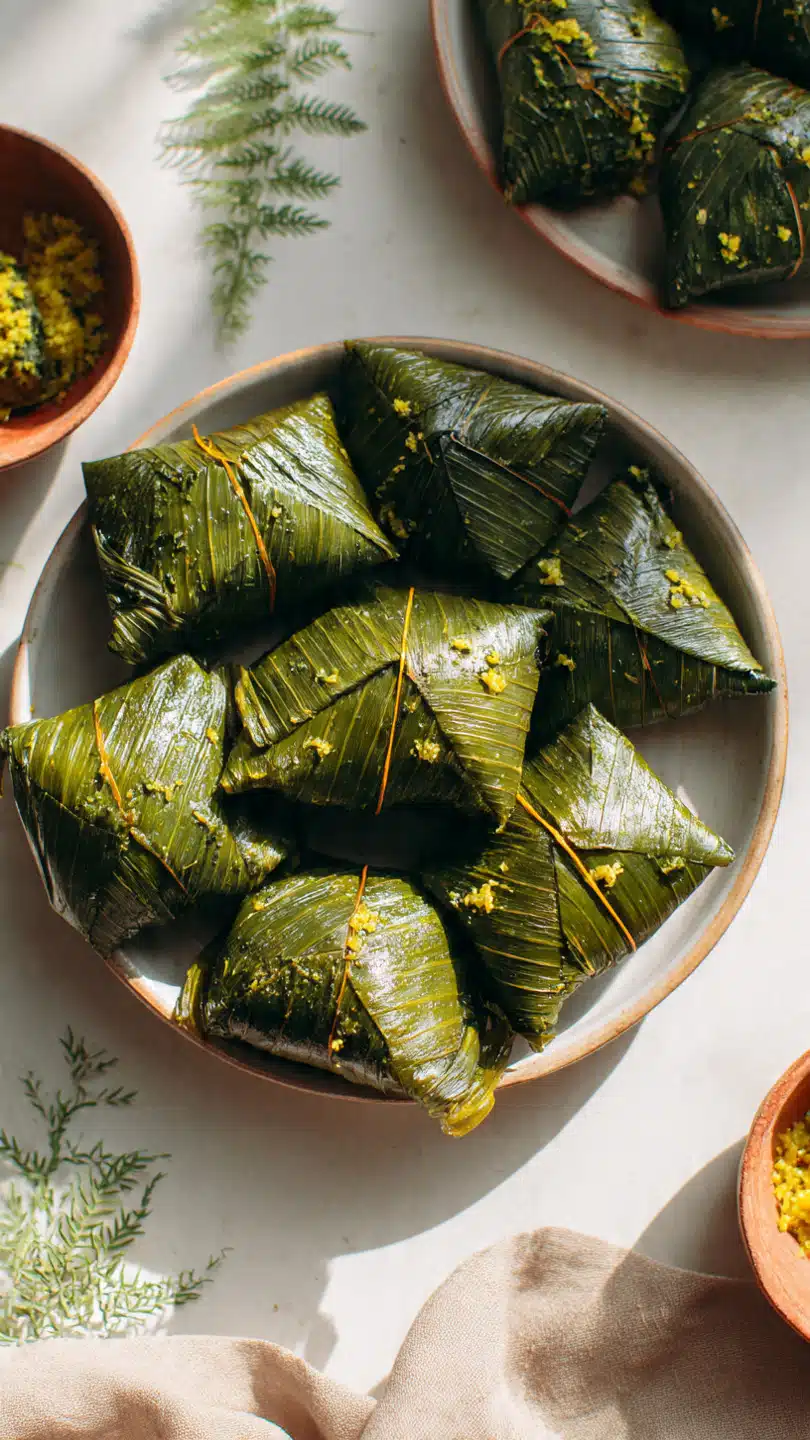
Pat Shak-er Paturi (Jute Leaf Paturi)
There is something deeply comforting about a leaf-wrapped dish that opens with a puff of steam and that unmistakable mustardy aroma. Pat Shak-er Paturi is one of those quiet, old-fashioned Bengali preparations that feels both humble and special, with soft jute leaves, fresh coconut, green chili, and mustard oil coming together in the most beautiful way. Trust me, you’re going to love this, especially if you enjoy recipes that feel earthy, fragrant, and full of character.
Why This Leaf-Wrapped Bengali Favorite Feels So Special
Some dishes do not need fancy techniques or long ingredient lists to leave an impression, and this is one of them. Pat Shak-er Paturi has a soft, silky texture from the jute leaves, a little heat from green chili, and that bold, slightly sharp mustard flavor that makes every bite feel alive. It is the kind of preparation that tastes wonderful with hot rice and turns a simple meal into something memorable.
And now let’s dive into the story behind it, because recipes like this always carry a little heritage along with their flavor.
A Gentle Taste of Bengali Kitchen Tradition
Paturi is a classic Bengali cooking style where ingredients are seasoned, wrapped in leaves, and then cooked gently, often by steaming or slow heating. This technique is loved for the way it traps aroma and moisture inside the parcel, allowing even simple ingredients to taste deeply infused and satisfying. Traditional paturi is often associated with fish, but vegetarian versions have long had their own place in home kitchens, especially when seasonal greens are at their peak.
Pat shak, or jute leaves, has been used across Bengal in comforting everyday cooking. When combined with mustard and coconut, it transforms into something surprisingly elegant. Let me tell you, it’s worth every bite.
Reasons This Recipe Earns a Spot in Your Kitchen
This dish has an old-world charm, but it also fits beautifully into modern cooking routines.
Versatile: It works as a light main dish with rice or as part of a larger Bengali-style spread. You can serve it for weekday lunches or for a slower weekend meal.
Budget-Friendly: The ingredient list is simple and practical, with pantry staples like mustard seeds, turmeric, chili, and salt doing most of the heavy lifting.
Quick and Easy: Once the leaves are washed and chopped, the mixture comes together very quickly. The steaming step is gentle and mostly hands-off.
Customizable: You can adjust the chili level, use a touch more coconut for richness, or make slightly smaller parcels for easier serving.
Crowd-Pleasing: Anyone who enjoys mustard-forward flavors and soft leafy dishes will find this incredibly satisfying, especially alongside warm rice.
Make-Ahead Friendly: The filling can be mixed ahead, and the parcels can be assembled before mealtime, which makes things easier when you want less last-minute work.
Great for Leftovers: The flavors settle beautifully, so leftovers taste lovely the next day after a gentle reheat.
Smart Cooking Tips That Make a Big Difference
Before you move to the ingredient bowl, a few little details can make the final result even better.
- Use tender jute leaves: Younger leaves cook into a softer, more delicate texture and taste less fibrous.
- Grind the mustard well: A smooth mustard paste gives the dish a cleaner, fuller flavor without rough bitterness.
- Warm the banana leaves lightly: This makes them flexible and much easier to fold without tearing.
- Do not overfill the parcels: A modest amount in each packet helps the filling cook evenly and keeps the shape tidy.
- Steam gently, not aggressively: Soft heat keeps the parcels moist and lets the flavors meld without drying the leaves.
The Simple Tools That Help Everything Come Together
The beauty of this dish is that it asks for very little, but the right tools do make the process smoother.
Mixing bowl: You will need a medium bowl to combine the chopped jute leaves with the mustard paste, coconut, and seasonings evenly.
Knife and chopping board: These help you prep the greens and chilies neatly and safely.
Small grinder or mortar and pestle: Useful for making a smooth mustard paste from the seeds.
Steamer or lidded pan: This is essential for cooking the parcels gently until tender and aromatic.
Kitchen twine or toothpicks: These help secure the banana leaf packets so they stay closed while steaming.
Everything You Need for This Flavorful Paturi
What makes this preparation shine is the way a handful of bold ingredients come together without competing. Each one has a clear role, and once wrapped and steamed, the mixture turns deeply fragrant, soft, and savory.
- Fresh jute leaves: 250 grams, washed and finely chopped, these form the heart of the dish and cook down into a silky, tender filling.
- Mustard seeds: 2 tablespoons, ground into a smooth paste, these bring the signature pungent Bengali flavor.
- Grated coconut: 2 tablespoons, this softens the sharpness of the mustard and adds gentle sweetness and body.
- Green chilies: 2, finely chopped, these add freshness and a bright little kick.
- Mustard oil: 2 tablespoons for mixing, plus 1 teaspoon for drizzling, this gives the dish its distinct aroma and depth.
- Turmeric powder: 1/4 teaspoon, this adds warm color and a subtle earthy note.
- Salt: 1 teaspoon, or to taste, this brings all the flavors into balance.
- Banana leaves: 4 medium pieces, lightly heated to soften, these hold the mixture and infuse it with a delicate leafy fragrance during steaming.
Easy Swaps If You Need a Flexible Version
Even traditional dishes sometimes need a practical little adjustment, and this one handles substitutions fairly well.
Jute leaves: Tender spinach or amaranth leaves, though the texture and flavor will be different.
Mustard seeds: Prepared mustard is not ideal, but in a pinch, a small amount of Dijon mixed with a little poppy seed paste can mimic some of the sharpness.
Grated coconut: Unsweetened frozen coconut or freshly desiccated coconut.
Green chilies: Mild fresh chili or a small pinch of chili flakes.
Banana leaves: Pumpkin leaves or bottle gourd leaves if available, or parchment for wrapping when needed, though the aroma will change.
The Ingredients That Truly Define the Dish
Some recipes are built around one standout flavor, but this one really leans on a beautiful pairing.
Jute leaves: Once cooked, they become soft, lush, and slightly slippery in the most appealing way, giving the dish its signature body.
Mustard oil and mustard paste: Together, they create that unmistakable boldness that makes the parcels smell incredible the moment they are opened.
Let’s Fold, Steam, and Bring It All to Life
Now comes the fun part, and honestly, this is where the whole dish starts to feel real. The mixing is quick, the wrapping is satisfying, and the steaming does the rest. Here are the steps you’re going to follow.
- Preheat Your Equipment: Set up a steamer or a deep pan with a steaming rack and bring the water to a gentle simmer.
- Combine Ingredients: In a medium bowl, mix the finely chopped jute leaves, mustard paste, grated coconut, chopped green chilies, turmeric powder, 2 tablespoons mustard oil, and salt. Stir well until the greens are evenly coated and the mixture looks glossy.
- Prepare Your Cooking Vessel: Lightly warm the banana leaf pieces over low heat for a few seconds each so they turn soft and flexible. This helps prevent tearing while folding.
- Assemble the Dish: Divide the jute leaf mixture into 4 equal portions. Place one portion in the center of each banana leaf piece, fold into secure parcels, and tie with kitchen twine or fasten with toothpicks. Drizzle a little of the remaining mustard oil over the parcels if you like a stronger aroma.
- Cook to Perfection: Arrange the parcels in the steamer and cook for 15 minutes, until the filling is tender and the banana leaves smell warm and fragrant.
- Finishing Touches: Let the parcels rest for 2 to 3 minutes after steaming so the filling settles slightly and the aroma deepens.
- Serve and Enjoy: Open carefully and serve hot with freshly cooked rice. The soft greens, coconut, and mustard create a rich bite that feels comforting and vivid all at once.
The Texture and Flavor Journey in Every Bite
One of the most lovely things about this dish is the contrast between softness and intensity. The jute leaves become silky and almost creamy once steamed, while the mustard brings that sharp, lively edge that cuts through beautifully. Coconut rounds everything out with a mellow sweetness, and the green chili keeps the flavor bright rather than heavy.
As the parcels steam, the banana leaves gently perfume the filling, which adds another layer of warmth. This one’s a total game-changer if you enjoy recipes where the aroma hits first and the flavor slowly unfolds after that.
Helpful Tricks for a Better Batch Every Time
A few thoughtful habits can make this dish even more enjoyable to cook.
- Chop the greens finely: This helps the filling bind together and cook evenly inside the parcels.
- Taste the mixture before wrapping: Adjust the salt and chili while it is still easy to fix.
- Keep the steamer covered well: Trapped steam helps the parcels cook evenly and stay moist.
- Use fresh mustard oil: Since the flavor is so prominent, freshness really matters here.
What Can Go Wrong, and How to Avoid It
This is a fairly simple dish, but there are a few places where a little care goes a long way.
- Using tough or mature leaves: These can stay fibrous, so choose tender greens whenever possible.
- Making the mustard paste too coarse: A rough paste can taste harsh, so grind it smoothly.
- Skipping the leaf-softening step: Stiff banana leaves may crack while folding.
- Steaming too long: Overcooking can dull the freshness and make the filling feel heavy.
A Quick Look at the Nutrition Facts
This dish feels rich in flavor, but it is still quite light and balanced, especially when served as part of a simple meal.
Servings: 4
Calories per serving: 140
Note: These are approximate values.
Timing That Fits Nicely Into a Busy Day
Even though it tastes like something slow and traditional, the actual timeline is pleasantly manageable.
Prep Time: 18 minutes
Cook Time: 15 minutes
Total Time: 33 minutes
Make-Ahead and Storage Tips That Actually Help
If you like getting ahead, you can wash and chop the jute leaves a few hours early and keep them chilled. You can also grind the mustard paste and mix the filling in advance, then assemble the parcels right before steaming. That makes the final cooking feel wonderfully easy.
Once cooked, leftover parcels can be stored in an airtight container in the refrigerator for up to 2 days. Reheat them by steaming gently for a few minutes or warming them in a covered pan over very low heat. Freezing is possible, though the leaf texture is best when fresh, so I would recommend enjoying this one sooner rather than later.
The Best Ways to Serve This Bengali Classic
Pat Shak-er Paturi is at its best with hot plain rice, where every bit of mustardy moisture gets absorbed beautifully. It also works well beside lentils, a light vegetable stir-fry, or a simple Bengali meal with rice and lime on the side.
For a slightly fuller plate, serve it with soft moong dal and a crisp fried vegetable on the side. The contrast of textures makes the whole meal feel thoughtful and complete.
Clever Ways to Use the Leftovers
If you happen to have a parcel or two left, do not let them go to waste because the flavor stays wonderful.
You can mash the leftover filling lightly into hot rice with an extra drop of mustard oil for a fast next-day lunch. You can also spoon it onto toasted bread for a savory open sandwich with a little sliced cucumber on the side. Another lovely option is to fold the filling into warm khichuri for an earthy, comforting variation.
Extra Little Details That Make Cooking Easier
Sometimes the smallest adjustments are the ones you remember the most the next time around.
Try using gloves while handling mustard and chilies if your skin is sensitive. Keep your banana leaf pieces evenly sized so the parcels cook at the same pace. And always place the seam side down in the steamer, which helps the packets stay closed naturally.
How to Make It Look As Good As It Tastes
Presentation matters, especially with leaf-wrapped dishes because they already feel a little ceremonial. Serve the parcels whole on a plate first, then open them at the table so the trapped aroma escapes all at once. That first moment is part of the charm.
A tiny drizzle of mustard oil just before serving can make the dish glisten beautifully. Pair it with white rice on a simple plate, and let those deep green and golden tones speak for themselves.
Variations Worth Trying in Your Own Kitchen
Once you get comfortable with the basic idea, there are a few lovely directions you can take.
- Poppy Seed Version: Add 1 tablespoon poppy seed paste for a softer, nuttier finish.
- Extra Coconut Style: Increase the grated coconut slightly for a milder, richer filling.
- Spicier Parcel: Add an extra green chili if you like more heat and sharper contrast.
- Mixed Greens Version: Combine jute leaves with a small amount of spinach for a gentler texture.
- Pan-Cooked Finish: After steaming, place the parcels briefly on a warm pan to deepen the banana leaf aroma.
FAQ’s
1. Can I make this without banana leaves?
Yes, you can use another edible wrapping leaf if available, or even parchment for structure, but the classic aroma will be different.
2. Is Pat Shak-er Paturi very spicy?
Not usually. It has a gentle heat from green chilies, and you can easily reduce or increase that based on your taste.
3. What does jute leaf taste like?
It has a mild, earthy flavor and becomes soft and silky when cooked, which makes it especially good for wrapped and steamed dishes.
4. Can I use frozen jute leaves?
Fresh is best for texture, but frozen can work if thawed and drained well before mixing.
5. Why is my mustard paste bitter?
Mustard can turn bitter if ground too coarsely or used in excess. A smooth paste and balanced quantity help keep the flavor bold but pleasant.
6. What rice goes best with this?
Simple steamed white rice is the best pairing because it lets the mustard and coconut flavors stand out clearly.
7. Can I steam the parcels in advance?
Yes, you can steam them a few hours earlier and reheat gently before serving.
8. Is this dish vegan?
Yes, this version is naturally vegan since it uses greens, coconut, mustard, spices, and banana leaves.
9. Can I cook the parcels in a pan instead of a steamer?
Yes, as long as the pan is covered and the heat stays low and gentle, though steaming gives the cleanest texture.
10. How do I know when the parcels are done?
The banana leaves will smell fragrant and the filling will look softened and glossy. After about 15 minutes of steaming, they are usually ready.
Conclusion
Pat Shak-er Paturi is one of those quiet treasures that proves simple ingredients can create something deeply memorable. The silky greens, bold mustard, soft coconut, and warm leaf aroma come together in a way that feels comforting, soulful, and completely satisfying. Give it a try the next time you want something traditional, flavorful, and a little different, because this dish really knows how to leave an impression.
Print
Pat Shak-er Paturi (Jute Leaf Paturi)
- Total Time: 33 minutes
- Yield: 4 servings
- Diet: Vegan
Description
A traditional Bengali leaf-wrapped dish made with tender jute leaves, mustard paste, coconut, and green chilies, steamed in banana leaves until soft, fragrant, and deeply flavorful.
Ingredients
- 250 grams fresh jute leaves, washed and finely chopped
- 2 tablespoons mustard seeds, ground into a smooth paste
- 2 tablespoons grated coconut
- 2 green chilies, finely chopped
- 2 tablespoons mustard oil
- 1 teaspoon mustard oil, for drizzling
- 1/4 teaspoon turmeric powder
- 1 teaspoon salt, or to taste
- 4 medium banana leaf pieces, lightly heated to soften
Instructions
- Set up a steamer or deep pan with a steaming rack and bring the water to a gentle simmer.
- In a mixing bowl, combine the finely chopped jute leaves, mustard paste, grated coconut, chopped green chilies, turmeric powder, 2 tablespoons mustard oil, and salt. Mix well until evenly coated.
- Lightly warm the banana leaf pieces over low heat for a few seconds so they become soft and flexible.
- Divide the jute leaf mixture into 4 equal portions. Place one portion in the center of each banana leaf piece, fold into secure parcels, and tie with kitchen twine or fasten with toothpicks.
- Drizzle the remaining 1 teaspoon mustard oil over the parcels if desired for extra aroma.
- Arrange the parcels in the steamer and cook for 15 minutes, until the filling is tender and aromatic.
- Let the parcels rest for 2 to 3 minutes, then serve hot with steamed rice.
Notes
- Use tender jute leaves for the softest texture.
- Grind the mustard seeds into a smooth paste to avoid bitterness.
- Do not overfill the banana leaf parcels, or they may open during steaming.
- This dish tastes best served fresh, but leftovers can be refrigerated for up to 2 days and reheated gently.
- Prep Time: 18 minutes
- Cook Time: 15 minutes
- Category: Main Course
- Method: Steaming
- Cuisine: Bengali
Nutrition
- Serving Size: 1 parcel
- Calories: 140
- Sugar: 2 g
- Sodium: 320 mg
- Fat: 11 g
- Saturated Fat: 3 g
- Unsaturated Fat: 8 g
- Trans Fat: 0 g
- Carbohydrates: 9 g
- Fiber: 3 g
- Protein: 3 g
- Cholesterol: 0 mg