
Steak Frites
There is something about a plate of sizzling steak and crisp golden fries that feels instantly comforting. It is simple, yes, but when every part is done right, the crust on the meat, the fluffy centers of the potatoes, the buttery pan sauce that slips into every corner, it turns into the kind of dinner that makes everyone go quiet for the first few bites. Trust me, you’re going to love this.
Why This Bistro Classic Never Goes Out of Style
Some meals are flashy, and then some meals just know exactly who they are. This one belongs in that second group. It brings together a deeply seared piece of beef, hand-cut fries with plenty of crunch, and a silky shallot butter sauce that ties everything together. It feels a little fancy, but it is still the kind of food you want on a cozy night when dinner needs to feel rewarding.
What makes it even better is the contrast. You get crisp edges, juicy centers, savory richness, and that little spark of parsley and Dijon that keeps every bite lively. Let me tell you, it’s worth every bite.
A Little French Bistro Story on the Side
Now that the craving is fully awake, it helps to know where the charm comes from. This dish is widely known as a French bistro classic, built around steak served with fries, and it has stayed popular because the combination is both elegant and deeply satisfying. Versions of it appear across French and Belgian dining culture, especially in casual brasseries and neighborhood spots that lean on simple ingredients cooked really well. :contentReference[oaicite:5]{index=5}
That history is part of the fun. It is not fussy food. It is confident food. A good pan, a hot oven, decent potatoes, and a flavorful cut of beef can get you surprisingly close to that little bistro-table feeling at home.
Reasons This Dinner Earns a Spot in Your Rotation
Once you know the backstory, the appeal gets even easier to understand. This one’s a total game-changer, especially when you want something that feels restaurant-worthy without turning your kitchen upside down.
Versatile: You can dress it up for date night or keep it casual for a family dinner. Add a green salad, roasted vegetables, or even a spoonful of mustard on the side and it still feels perfectly balanced.
Budget-Friendly: You do not need the most expensive cut in the butcher case to make this work. A good sirloin or strip steak seared properly gives you plenty of flavor, especially with that buttery sauce.
Quick and Easy: Once the potatoes are in the oven, the rest moves fast. The steak sears in minutes, and the pan sauce comes together right in the same skillet.
Customizable: You can cook the beef to your favorite doneness, switch herbs, or add black pepper for more bite. There is room to make it feel like your own without losing the spirit of the dish.
Crowd-Pleasing: Crispy fries and juicy steak are hard to argue with. Even picky eaters tend to get excited when this lands on the table.
Make-Ahead Friendly: The potatoes can be cut and soaked ahead, and the shallot can be chopped in advance. That means dinner feels much easier when it is time to cook.
Great for Leftovers: Sliced steak reheats beautifully for sandwiches, grain bowls, or breakfast hash, and leftover fries can be revived in a hot oven until crisp again.
Chef Secrets That Make a Big Difference
And now that you are fully on board, let’s get into the little details that separate a good plate from a great one.
- Dry the potatoes really well: After soaking, make sure the fries are thoroughly dried before oil touches them. Moisture is the enemy of crisp edges.
- Let the steaks sit at room temperature briefly: About 20 minutes on the counter helps them cook more evenly and sear better.
- Use a hot pan, then leave the meat alone: A proper crust forms when the steak has direct contact with a hot skillet and is not moved around too soon.
- Rest the steak before slicing: Those few minutes keep the juices where you want them, inside the meat instead of running across the plate.
- Build the sauce in the same pan: The browned bits left behind are pure flavor, and they are exactly what makes the sauce taste rich and layered. Pan-sauce methods built from fond, shallots, broth, and butter are a classic steak technique. :contentReference[oaicite:6]{index=6}
Kitchen Tools That Set You Up for Success
Before the cooking starts, it helps to pull out the right tools. Nothing complicated here, just a few reliable basics that make the whole process smoother.
Chef’s knife: For cutting the potatoes into even fries and slicing the rested steak cleanly.
Large baking sheet: Gives the fries room to roast instead of steam.
Large cast-iron skillet or heavy pan: Helps create that deep brown crust on the meat.
Mixing bowl: Useful for tossing the fries with oil and seasoning.
Tongs: Makes flipping the steaks feel easy and controlled.
Small spoon or whisk: Perfect for stirring the pan sauce until glossy and smooth.
Paper towels: Surprisingly important, because drying the potatoes and patting the steaks dry really matters.
The Ingredients That Make Every Bite Count
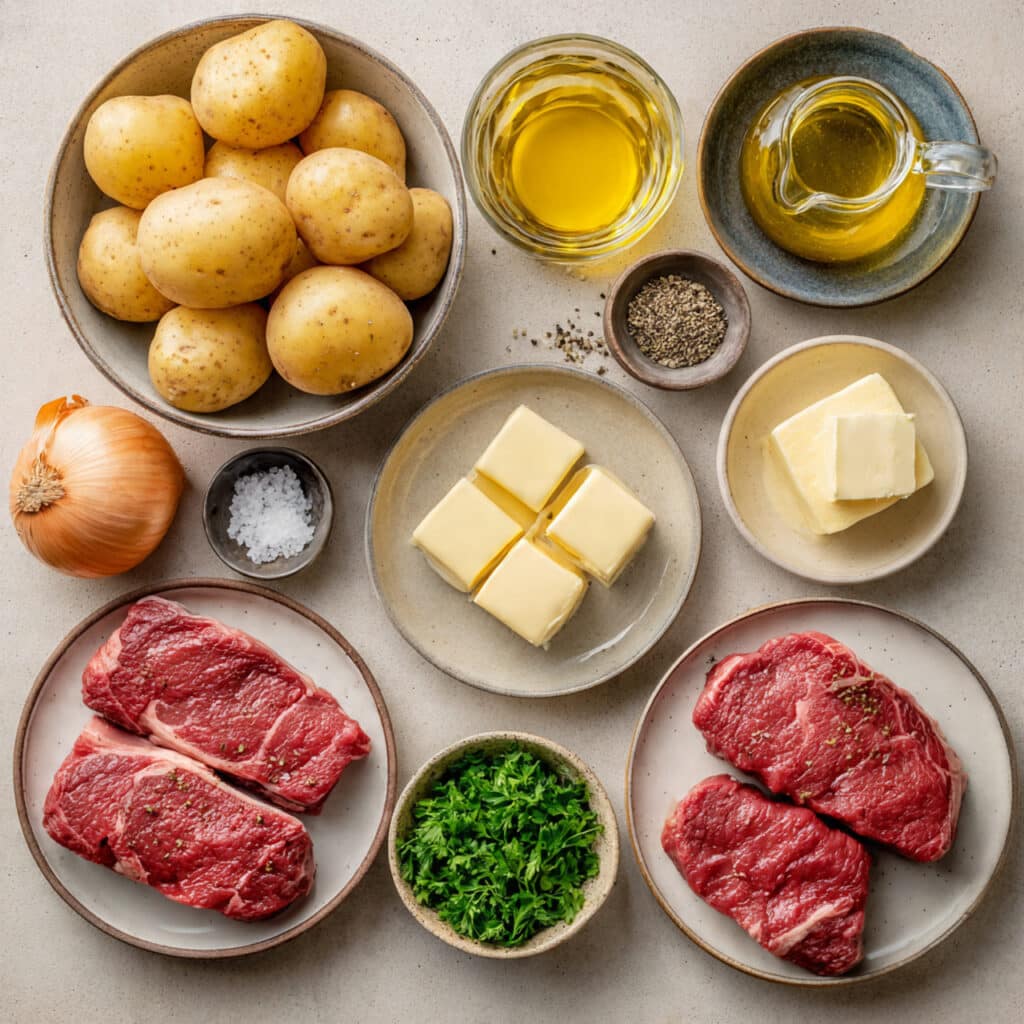
Now let’s dive into the lineup, because this recipe shines when each ingredient has a clear job to do. Nothing extra, nothing confusing, just a handful of components working together in the most delicious way.
- Russet potatoes: 2 pounds, cut into 1/4-inch fries, these are the backbone of the plate because they roast up crisp on the outside and fluffy in the middle.
- Sirloin steaks: 4 steaks, 6 ounces each, about 1 inch thick, these give you rich beefy flavor and cook quickly with a beautiful seared crust.
- Olive oil: 2 tablespoons, this coats the fries and helps the steaks brown nicely in the pan.
- Kosher salt: 1 1/2 teaspoons, divided, this seasons both the potatoes and the beef in a balanced way.
- Black pepper: 1 teaspoon, divided, this adds warmth and a little edge without taking over.
- Unsalted butter: 2 tablespoons, this melts into the sauce and makes everything taste rounder and silkier.
- Shallot: 1 small, finely chopped, it brings a gentle sweetness that feels elegant instead of harsh.
- Low-sodium beef broth: 1/3 cup, this loosens the fond from the pan and gives the sauce savory depth.
- Dijon mustard: 1 teaspoon, this wakes up the sauce with a subtle tang.
- Chopped fresh parsley: 1 tablespoon, this freshens the final plate and cuts through the richness.
Easy Swaps That Still Taste Amazing
And because cooking at home should feel flexible, here are a few easy substitutions that still keep the spirit of the meal intact.
Sirloin steaks: Strip steak, ribeye, or flat iron steak.
Russet potatoes: Yukon Gold potatoes, though they will be slightly creamier and a little less crisp.
Shallot: Finely minced red onion for a stronger but still tasty flavor.
Beef broth: Chicken broth if that is what you have, though the sauce will be a little lighter.
Parsley: Chives for a softer onion note.
Dijon mustard: Whole grain mustard for a slightly chunkier finish.
The Ingredients That Quietly Do the Heavy Lifting
Some ingredients may seem small, but they are the reason this plate feels complete rather than basic.
Shallot: Once it softens in the buttery skillet, it gives the sauce a mellow sweetness that feels polished and just a little fancy.
Russet potatoes: Their starch content is exactly what helps create that irresistible contrast between crisp exterior and soft, fluffy center.
Let’s Cook This Like a Pro
This is where the magic starts to look real. Put on some music, get your pan hot, and enjoy the process, because this dinner is as satisfying to make as it is to eat.
- Preheat Your Equipment: Heat your oven to 425°F. Line a large baking sheet with parchment paper. Place a large cast-iron skillet on the stove, but do not heat it yet.
- Combine Ingredients: Soak the cut potatoes in cold water for 15 minutes, then drain and dry them very well with paper towels. Transfer them to a bowl and toss with 1 tablespoon olive oil, 1/2 teaspoon kosher salt, and 1/4 teaspoon black pepper. Pat the steaks dry and season both sides with the remaining 1 teaspoon kosher salt and 3/4 teaspoon black pepper.
- Prepare Your Cooking Vessel: Spread the fries in a single layer on the baking sheet. Set the skillet over medium-high heat and add the remaining 1 tablespoon olive oil. Let the pan get properly hot so the steaks will sear instead of steam.
- Assemble the Dish: Slide the fries into the oven and roast for 30 to 35 minutes, flipping once halfway through. Meanwhile, place the steaks in the hot skillet in a single layer. Let them cook undisturbed for 3 to 4 minutes on the first side.
- Cook to Perfection: Flip the steaks and cook for another 3 to 4 minutes for medium-rare, or a little longer if you like them more done. Transfer the steaks to a plate and let them rest for 5 to 7 minutes. Reduce the skillet heat to medium, add the butter and chopped shallot, and cook for 1 to 2 minutes until softened. Stir in the beef broth and Dijon mustard, scraping up the browned bits from the pan. Simmer for 2 to 3 minutes until slightly reduced and glossy.
- Finishing Touches: Stir the parsley into the sauce. Slice the rested steaks against the grain. Check the fries, and if you want extra color, give them another 2 minutes in the oven.
- Serve and Enjoy: Pile the fries onto plates, add the sliced steak, and spoon the warm shallot butter sauce over the top. Serve right away while everything is hot, crisp, and deeply inviting.
What Makes the Texture and Flavor So Good
Once the plate is built, you really see why this combination works so well. The fries bring that audible crunch at the edges, then soften into a fluffy center. The steak gives you a seared crust with a juicy middle, and the sauce slips over it all in a buttery, savory layer that catches in the ridges of the sliced meat.
Flavor-wise, every piece has a purpose. The beef is rich, the potatoes are earthy and crisp, the shallot adds sweetness, and the Dijon keeps the sauce from feeling too heavy. Then the parsley comes in right at the end and brightens the whole thing. It is simple layering, but it tastes incredibly complete.
Smart Little Tricks for an Even Better Plate
By now, you are already close to dinner, so here are a few extra tricks that make the whole experience even smoother.
- Soak the potatoes if you have time: It helps remove excess surface starch and encourages a crisper finish.
- Do not crowd the baking sheet: Give the fries room, or they will soften instead of roast.
- Slice the steak just before serving: That keeps it juicy and helps the sauce stay glossy on top.
- Warm the plates slightly: Hot food stays delicious longer when it lands on a warm plate.
Mistakes That Can Get in the Way, and How to Fix Them
Even a straightforward dinner has a few traps, but they are easy to avoid once you know what to watch for.
- Skipping the drying step: Wet potatoes roast poorly, so dry them really well before seasoning.
- Using a pan that is not hot enough: If the steak looks pale instead of deeply browned, give the pan more time to heat.
- Cutting the meat too soon: Resting matters, and a few minutes make a big difference in juiciness.
- Reducing the sauce too long: If it gets too thick, add a splash of broth to loosen it back up.
A Quick Look at the Nutrition
You have made it through the cooking, so here is the practical side of things.
Servings: 4
Calories per serving: 520
Note: These are approximate values.
Timing That Helps You Plan Dinner Right
And if you are figuring out when to start, this breakdown keeps things simple.
Prep Time: 25 minutes
Cook Time: 35 minutes
Total Time: 1 hour
Make-Ahead and Storage Tips That Actually Help
If you want to get ahead, the potatoes can be cut and kept in cold water in the fridge for several hours. Just dry them very well before roasting. The shallot can also be chopped ahead, which saves you a little time at the stove.
Leftovers keep nicely in an airtight container in the refrigerator for up to 3 days. For the best texture, reheat the fries in a 400°F oven until crisp again, and warm the steak gently in a skillet or low oven so it does not dry out. Freezing is possible for the cooked fries, though they are best fresh. The sliced steak can be frozen for up to 2 months, wrapped well, then thawed overnight in the fridge before reheating.
The Best Ways to Bring It to the Table
Once everything is ready, keep the serving simple and confident. A crisp green salad with a sharp vinaigrette works beautifully here, because it cuts through the richness without competing. Roasted green beans or garlicky spinach also fit in naturally.
For a little extra restaurant energy, serve with extra Dijon on the side or a spoonful of the warm pan sauce at the table. A few parsley leaves on top make the whole plate look bright and finished.
Leftovers That Deserve a Second Life
And now for one of the best parts, because leftovers from this meal are anything but boring.
Slice the beef thin and tuck it into a toasted sandwich with mustard and greens. Chop it into a breakfast skillet with eggs and onions. Toss it over a salad with crispy reheated fries for a steakhouse-style lunch. You can even fold the sliced meat into a grain bowl with greens and a lemony dressing.
Final Little Notes Before You Make It Again
There are recipes you try once, and then there are recipes you start craving at random. This one falls firmly into the second category.
Season confidently, let the pan get hot, and do not rush the resting step. Those three things alone push the result from good to genuinely memorable. And if your fries come out especially crisp the first time, hold onto that victory, because that is the sort of kitchen moment that keeps you coming back.
How to Make It Look Restaurant-Worthy at Home
Presentation does not need to be fussy here. In fact, the beauty of this dinner comes from the contrast and color. Fan the sliced steak slightly so the rosy center shows. Stack the fries in a casual pile next to it instead of scattering them. Then spoon the sauce over only part of the meat so you still see the crust underneath.
A little chopped parsley at the very end makes the colors pop. Clean plate edges help too. It takes less than ten seconds, and suddenly the whole thing looks polished.
Variations That Keep It Fresh
Once you have made the classic version, there are plenty of ways to play around with it.
Peppery Bistro Style: Add extra cracked black pepper to the steaks before searing for a more assertive, steakhouse feel.
Garlic Herb Finish: Stir a little minced garlic into the butter with the shallot for a more aromatic sauce.
Loaded Fries Version: Sprinkle the hot fries with extra parsley and a tiny spoonful of Dijon for a sharper finish.
Skillet-Cooked Potatoes: Swap the oven fries for pan-roasted potato wedges if that is what you have on hand.
Greens on the Side: Serve with a simple arugula salad tossed in lemon juice and olive oil for a fresher plate.
FAQ’s
1. Can I use ribeye instead of sirloin?
Absolutely. Ribeye is richer and more marbled, so it gives you an even juicier result.
2. How do I know when the steak is done?
A thermometer is the easiest way. Aim for about 130°F for medium-rare, then let it rest before slicing.
3. Do I have to soak the potatoes?
No, but it helps. Soaking removes some surface starch and can improve the final texture.
4. Can I cook the fries in an air fryer?
Yes. Cook them in batches so they crisp properly, then finish the steak and sauce on the stove.
5. What is the best pan for the steak?
A cast-iron skillet is ideal because it holds heat well and creates a strong sear.
6. Can I make the sauce without mustard?
Yes, though the Dijon adds a really nice little spark. The sauce will still taste buttery and savory without it.
7. How should I slice the steak?
Slice it against the grain. That shortens the muscle fibers and keeps each bite tender.
8. Can I use frozen fries?
You can, especially on a busy night. The meal will still taste great, though homemade fries feel a bit more special.
9. Is this naturally gluten-free?
It can be, as long as your broth and mustard are certified gluten-free. The ingredient list itself does not require flour or breading.
10. What should I do if my sauce gets too salty?
Add a small splash of extra broth and a little more butter to mellow it out.
Conclusion
This plate has a way of making dinner feel like an occasion without asking you to do anything overly complicated. The crisp fries, juicy slices of beef, and glossy shallot butter sauce all come together in a way that feels cozy, classic, and just a little bit indulgent. Trust me, once you make it, you will understand why people come back to it again and again. Set the table, grab your skillet, and enjoy every last bite.
Print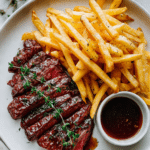
Steak Frites
- Total Time: 1 hour
- Yield: 4 servings
- Diet: Gluten Free
Description
A cozy bistro-style dinner with seared sirloin steaks, crispy oven fries, and a silky shallot butter pan sauce.
Ingredients
- 2 pounds russet potatoes, cut into 1/4-inch fries
- 4 sirloin steaks, 6 ounces each, about 1 inch thick
- 2 tablespoons olive oil
- 1 1/2 teaspoons kosher salt, divided
- 1 teaspoon black pepper, divided
- 2 tablespoons unsalted butter
- 1 small shallot, finely chopped
- 1/3 cup low-sodium beef broth
- 1 teaspoon Dijon mustard
- 1 tablespoon chopped fresh parsley
Instructions
- Preheat the oven to 425°F and line a large baking sheet with parchment paper.
- Soak the cut potatoes in cold water for 15 minutes, then drain and dry very well with paper towels.
- Toss the potatoes with 1 tablespoon olive oil, 1/2 teaspoon kosher salt, and 1/4 teaspoon black pepper. Spread them in a single layer on the baking sheet.
- Roast the fries for 30 to 35 minutes, flipping once halfway through, until golden and crisp.
- Pat the steaks dry and season both sides with the remaining 1 teaspoon kosher salt and 3/4 teaspoon black pepper.
- Heat the remaining 1 tablespoon olive oil in a large cast-iron skillet over medium-high heat. Sear the steaks for 3 to 4 minutes per side for medium-rare, or a little longer for your preferred doneness.
- Transfer the steaks to a plate and let them rest for 5 to 7 minutes.
- Reduce the heat to medium. Add the butter and chopped shallot to the same skillet and cook for 1 to 2 minutes until softened.
- Stir in the beef broth and Dijon mustard, scraping up the browned bits from the pan. Simmer for 2 to 3 minutes until slightly reduced and glossy.
- Stir in the parsley, slice the rested steaks against the grain, then serve with the fries and spoon the warm shallot butter sauce over the top.
Notes
- Drying the potatoes well is the key to crisp fries.
- Let the steaks rest before slicing so they stay juicy.
- If the sauce reduces too much, loosen it with a small splash of broth.
- For extra crisp fries, give them 2 more minutes in the oven before serving.
- Prep Time: 25 minutes
- Cook Time: 35 minutes
- Category: Dinner
- Method: Oven-Roasted and Pan-Seared
- Cuisine: French
Nutrition
- Serving Size: 1 plate
- Calories: 520
- Sugar: 2 g
- Sodium: 540 mg
- Fat: 27 g
- Saturated Fat: 9 g
- Unsaturated Fat: 16 g
- Trans Fat: 0 g
- Carbohydrates: 32 g
- Fiber: 3 g
- Protein: 35 g
- Cholesterol: 95 mg