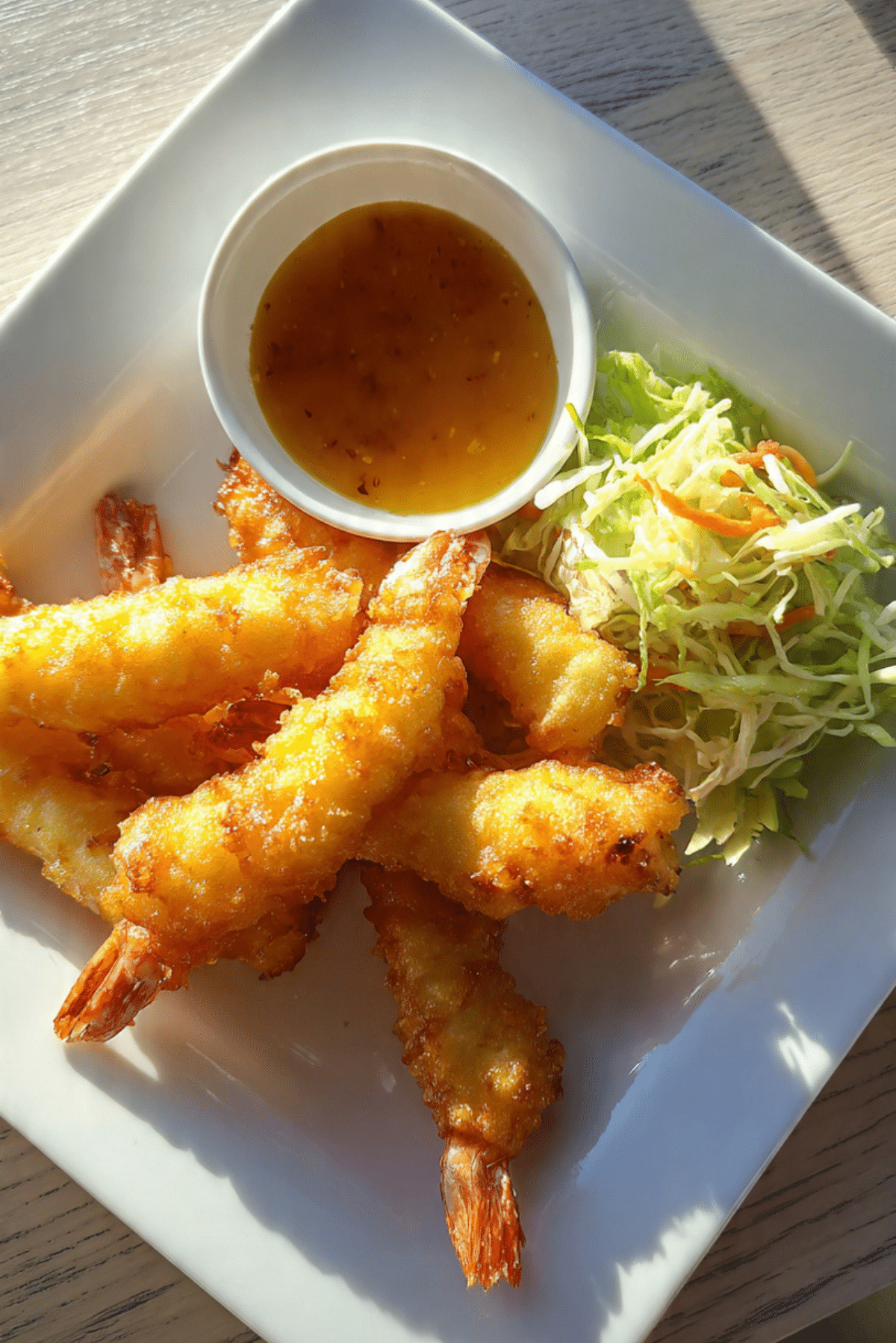
Shrimp Tempura
Crispy on the outside, tender on the inside, and impossibly light — shrimp tempura is one of those dishes that instantly transports you to a cozy Japanese restaurant. The golden batter shatters at first bite, giving way to juicy shrimp, all while that savory dipping sauce waits patiently on the side. Whether you’re hosting guests or simply treating yourself, this recipe delivers restaurant-quality magic right from your own kitchen.
Behind the Recipe
I still remember the first time I tried shrimp tempura — it was at a tiny sushi bar tucked away on a side street, and the crackle of that batter hooked me instantly. I went home determined to recreate it, trying out different batters and techniques until I found the perfect one. This recipe is the result of many crispy, golden experiments, and now it’s a go-to whenever I need something impressive yet comforting.
Recipe Origin or Trivia
Tempura was actually introduced to Japan by Portuguese missionaries in the 16th century. While the technique originally came from Europe, Japan perfected it by creating a lighter, airier batter using ice-cold water and minimal mixing. Over time, it became a cornerstone of Japanese cuisine, often served with rice, dipping sauce, or even over noodles.
Why You’ll Love Shrimp Tempura
This dish checks so many boxes — it’s light yet satisfying, elegant yet simple, and perfect for any occasion.
Versatile: Serve it as an appetizer, pair with rice for a full meal, or use it in sushi rolls. It fits in everywhere.
Budget-Friendly: With just a few pantry staples and shrimp, you’ve got something that feels like fine dining without the price tag.
Quick and Easy: The batter takes minutes, and shrimp cook in no time. You’ll be crunching away before you know it.
Customizable: Not into shrimp? Use veggies like sweet potato, zucchini, or mushrooms with the same batter.
Crowd-Pleasing: Who can say no to crispy, golden goodness? These disappear fast at any gathering.
Make-Ahead Friendly: Prep the batter and shrimp ahead, then fry just before serving for ultimate crisp.
Great for Leftovers: Reheat in the oven or air fryer to bring back that crunch the next day.
Chef’s Pro Tips for Perfect Results
Getting shrimp tempura just right is all about the details — here’s how to nail it every time.
- Keep Everything Cold: Use ice-cold sparkling water and even chill the flour. Cold batter means less oil absorption and more crunch.
- Do Not Overmix: A few lumps are fine. Overmixing activates gluten, making the batter heavy instead of airy.
- Fry in Small Batches: This keeps the oil temperature steady, helping each piece come out crispy.
- Dry the Shrimp Well: Any moisture on the shrimp causes oil splatter and soggy batter. Pat them dry thoroughly before dipping.
- Use Chopsticks to Stir: It helps avoid overmixing and gives you more control than a whisk.
Kitchen Tools You’ll Need
These tools make the process smooth and mess-free.
Mixing Bowls: For making the batter and prepping shrimp.
Wire Rack or Paper Towels: To drain excess oil after frying.
Deep Frying Pot or Dutch Oven: Maintains consistent oil temperature.
Slotted Spoon or Tongs: For safely lowering and removing shrimp from hot oil.
Thermometer: To ensure oil stays at the ideal frying temp — around 340°F to 360°F.
Ingredients in Shrimp Tempura
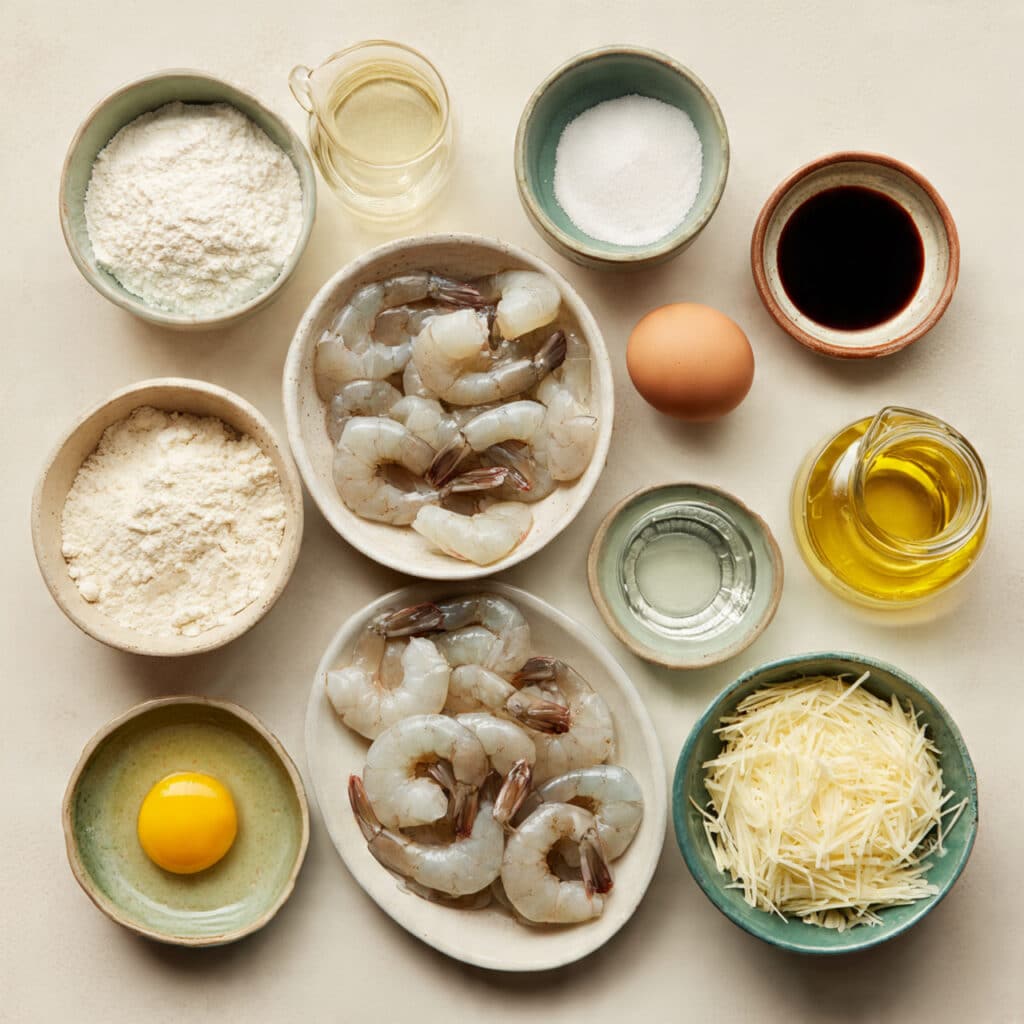
What makes shrimp tempura shine is the balance between simplicity and precision. Each ingredient plays a specific role.
- Raw Shrimp: 1 pound, peeled and deveined with tails on. Shrimp are the star here — keep them cold until ready to fry.
- All-Purpose Flour: 1 cup. Forms the base of the batter.
- Cornstarch: 1/4 cup. Adds lightness and crisp texture.
- Baking Powder: 1/2 teaspoon. Helps the batter puff slightly.
- Egg: 1 large, cold. Adds richness and helps bind the batter.
- Cold Sparkling Water: 1 cup. The bubbles help make the batter airy.
- Salt: 1/2 teaspoon. Enhances flavor.
- Vegetable Oil: For frying. Use a neutral oil with high smoke point.
- Soy Sauce: 1/4 cup. Base of the dipping sauce.
- Grated Daikon: 2 tablespoons. Adds refreshing balance to the sauce.
- Mirin: 1 tablespoon. Adds sweetness to the sauce.
- Dashi Stock: 1/4 cup. Optional but enhances umami in dipping sauce.
Ingredient Substitutions
No need to panic if you’re missing an item. Here are some handy swaps.
Cornstarch: Potato starch or rice flour.
Sparkling Water: Use very cold still water, but you’ll lose some airiness.
Vegetable Oil: Canola or sunflower oil.
Grated Daikon: Use finely grated radish or omit if not available.
Mirin: A mix of water and a pinch of sugar can substitute.
Ingredient Spotlight
Cornstarch: This pantry staple lightens the batter, giving it that signature airy crunch instead of a dense coating.
Shrimp: Look for medium to large shrimp, and always keep them chilled until the moment you fry. This keeps them juicy inside.
Instructions for Making Shrimp Tempura
There’s something oddly satisfying about battering and frying at home — the sizzle, the golden edges, the anticipation. Here are the steps you’re going to follow:
- Preheat Your Equipment:
Heat vegetable oil in a deep pot to 350°F. Line a tray with paper towels or place a wire rack nearby. - Combine Ingredients:
In a mixing bowl, lightly beat the cold egg. Add cold sparkling water and gently mix. Sift in the flour, cornstarch, baking powder, and salt. Stir lightly with chopsticks — lumps are okay. - Prepare Your Cooking Vessel:
Make sure the oil stays at a consistent temperature. Avoid overcrowding the pot. - Assemble the Dish:
Pat shrimp dry. Lightly dust them with flour so the batter sticks better. Dip each shrimp into the batter, letting excess drip off. - Cook to Perfection:
Carefully lower shrimp into the hot oil, a few at a time. Fry for about 2 minutes or until golden and crispy. Remove and drain on prepared rack or paper towels. - Finishing Touches:
In a small saucepan, combine soy sauce, mirin, and dashi. Heat gently and add grated daikon. Serve warm on the side. - Serve and Enjoy:
Plate the shrimp tempura while still warm with dipping sauce on the side. Add shredded cabbage or steamed rice for a fuller meal.
Texture & Flavor Secrets
The magic lies in the contrast. The batter is whisper-light and audibly crispy, while the shrimp stay plump and juicy. That hot-cold contrast in the batter, along with minimal mixing, keeps everything impossibly delicate. The dipping sauce brings in a salty-sweet balance, and the daikon adds a cool, sharp bite to cut through the richness.
Cooking Tips & Tricks
Let’s make sure this recipe turns out perfect every time.
- Use chilled ingredients and tools for lighter batter.
- Don’t batter all the shrimp at once. Dip as you fry.
- Rest the batter 5 minutes before using to let the flour hydrate.
- Fry vegetables with leftover batter for a bonus snack.
What to Avoid
Even pros can make a few missteps — here’s how to dodge them.
- Overmixing the batter: It leads to chewy, heavy coating.
- Using warm water: Warm batter equals oily tempura.
- Frying too many at once: Lowers the oil temperature and ruins texture.
- Skipping the pre-dusting: Batter won’t stick well.
Nutrition Facts
Servings: 4
Calories per serving: 310
Note: These are approximate values.
Preparation Time
Prep Time: 15 minutes
Cook Time: 15 minutes
Total Time: 30 minutes
Make-Ahead and Storage Tips
You can prep the batter ingredients and shrimp in advance, keeping everything chilled. The dipping sauce can be made a day ahead and stored in the fridge. Leftover tempura should be stored in an airtight container and reheated in the oven or air fryer for best texture. Avoid microwaving, which softens the crisp.
How to Serve Shrimp Tempura
Shrimp tempura is amazing on its own, but it shines even brighter when paired thoughtfully.
- Serve over a bowl of rice for a quick tempura donburi.
- Add to a noodle bowl for a crunchy, savory topping.
- Plate with shredded cabbage and miso soup for a classic combo.
- Include as part of a sushi night spread.
Creative Leftover Transformations
Don’t let those crunchy bites go to waste.
- Chop and fold into an egg omelet for a crispy surprise.
- Use in a rice bowl with soft-boiled egg and soy glaze.
- Add to a sandwich with wasabi mayo and lettuce.
- Toss into a salad with sesame dressing.
Additional Tips
- Keep your batter bowl over ice if you’re cooking in batches.
- Use chopsticks or wooden skewer to test oil temperature — bubbles mean it’s ready.
- Sift dry ingredients for the lightest texture.
- Clean oil with a strainer if reusing for multiple batches.
Make It a Showstopper
Presentation matters — and tempura delivers in style.
- Serve on a rectangular platter with the tails all pointing in the same direction.
- Add a lemon wedge or parsley for a fresh pop.
- Use a dark dipping bowl for contrast.
- Plate with precision and clean lines for a restaurant-worthy look.
Variations to Try
- Vegetable Tempura: Use zucchini, mushrooms, or sweet potato.
- Spicy Tempura: Add chili powder or cayenne to the batter.
- Gluten-Free: Use rice flour instead of wheat flour.
- Tempura Sushi Rolls: Use tempura as a filling or topping.
- Herbed Tempura: Add finely chopped parsley or shiso leaves to the batter.
FAQ’s
Q1: Can I use frozen shrimp?
Yes, just thaw and dry them completely before using.
Q2: What oil is best for frying tempura?
Neutral oils like canola, sunflower, or vegetable oil work best.
Q3: Can I reuse the frying oil?
Yes, strain it and store it in a cool place for up to one more use.
Q4: Why is my tempura soggy?
The batter or oil may have been too warm, or you overcrowded the pot.
Q5: Can I make tempura without eggs?
Yes, you can omit the egg, though the texture may be slightly different.
Q6: What’s the best side dish with tempura?
Steamed rice, miso soup, and pickled vegetables complement it well.
Q7: How long does tempura batter last?
It’s best used immediately, but can sit in the fridge for up to 30 minutes.
Q8: Is tempura gluten-free?
Not typically, but you can make it with rice flour or gluten-free blends.
Q9: Can I use other seafood?
Absolutely. Try squid, scallops, or white fish.
Q10: How do I keep it warm before serving?
Place cooked tempura in a warm oven (around 200°F) on a rack until ready.
Conclusion
Shrimp tempura is one of those recipes that brings joy with every bite — the crisp, the crunch, the umami-rich dip. Whether you’re sharing it with friends or making it just because, this dish delivers that perfect mix of lightness and indulgence. Trust me, you’re going to love this. So grab some shrimp, heat that oil, and let’s make tempura magic.
Print
Shrimp Tempura
- Total Time: 30 minutes
- Yield: 4 servings
- Diet: Low Lactose
Description
Crispy, golden shrimp tempura made with a light, airy batter and served with a savory dipping sauce. This Japanese classic is perfect for appetizers or a full meal.
Ingredients
- 1 pound raw shrimp, peeled and deveined with tails on
- 1 cup all-purpose flour
- 1/4 cup cornstarch
- 1/2 teaspoon baking powder
- 1 large cold egg
- 1 cup cold sparkling water
- 1/2 teaspoon salt
- Vegetable oil, for frying
- 1/4 cup soy sauce
- 2 tablespoons grated daikon
- 1 tablespoon mirin
- 1/4 cup dashi stock (optional)
Instructions
- Heat vegetable oil in a deep pot to 350°F. Line a tray with paper towels or a wire rack.
- In a mixing bowl, lightly beat the cold egg. Add cold sparkling water and gently mix.
- Sift in flour, cornstarch, baking powder, and salt. Stir gently with chopsticks. Lumps are okay.
- Pat shrimp dry and lightly dust with flour. Dip into batter and let excess drip off.
- Fry shrimp in batches for about 2 minutes or until golden and crispy. Drain on prepared tray.
- In a small saucepan, combine soy sauce, mirin, and dashi. Heat gently and add grated daikon. Serve warm on the side.
- Serve shrimp tempura hot with dipping sauce. Add steamed rice or shredded cabbage if desired.
Notes
- Keep all batter ingredients cold for a lighter, crispier result.
- Do not overmix the batter. A few lumps are fine.
- Fry in small batches to maintain oil temperature.
- Reheat leftovers in the oven or air fryer to restore crispiness.
- Prep Time: 15 minutes
- Cook Time: 15 minutes
- Category: Main Dish
- Method: Frying
- Cuisine: Japanese
Nutrition
- Serving Size: 1 serving
- Calories: 310
- Sugar: 2g
- Sodium: 620mg
- Fat: 18g
- Saturated Fat: 3g
- Unsaturated Fat: 13g
- Trans Fat: 0g
- Carbohydrates: 22g
- Fiber: 1g
- Protein: 15g
- Cholesterol: 105mg