
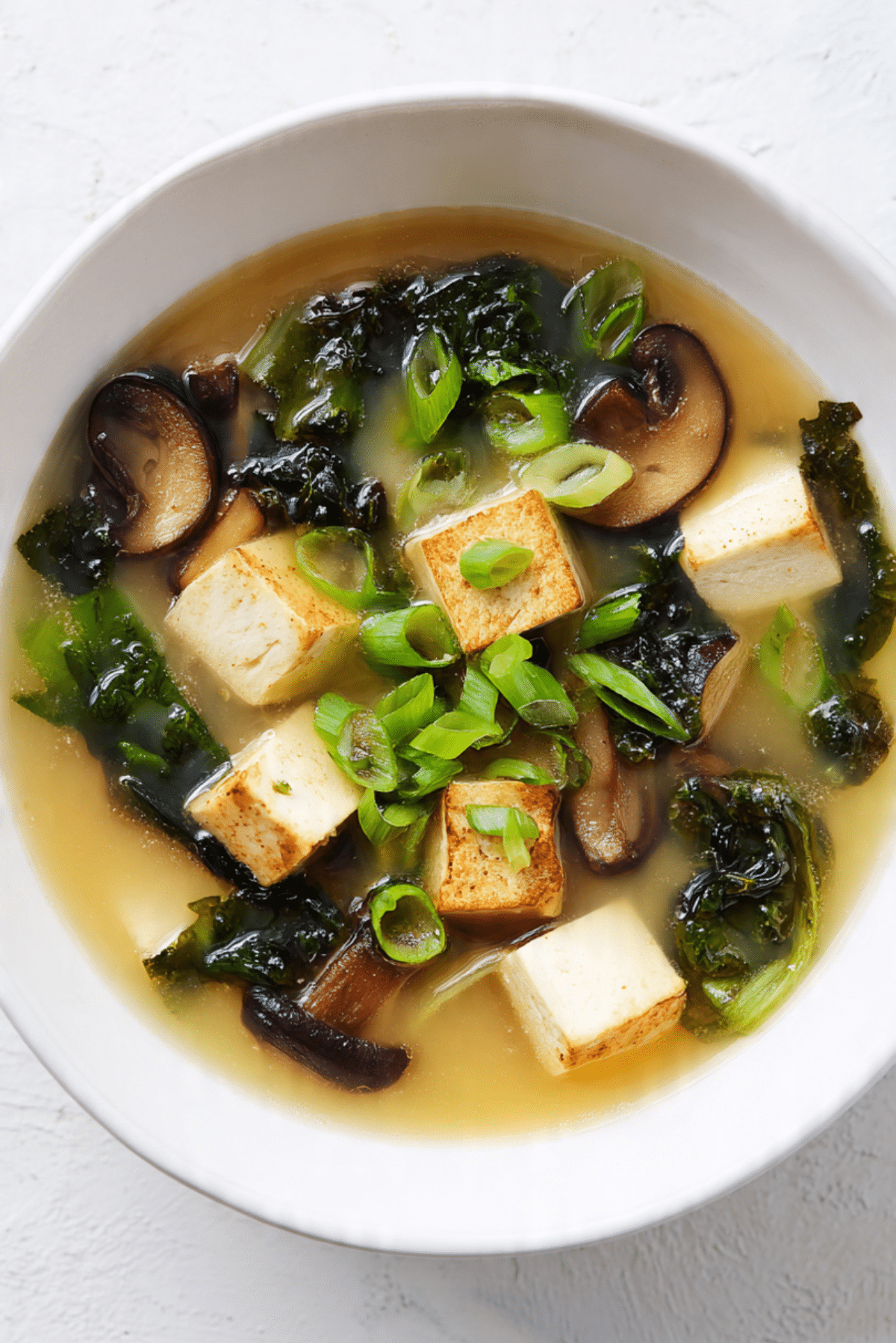
Miso Soup with Tofu
There’s something magical about a warm bowl of miso soup. The gentle umami aroma, the soft tofu melting in your mouth, and the slight crunch of green onions make this humble dish feel like a warm hug from the inside. Whether you’re sipping it on a chilly evening or serving it as a light starter, miso soup with tofu brings comfort, nourishment, and a touch of tradition to every spoonful.
Behind the Recipe
This recipe comes from a cozy memory of visiting a little Japanese restaurant tucked into a quiet street corner. They’d always bring a tiny bowl of miso soup before the main dish, and I found myself looking forward to that moment more than anything else. That gentle miso aroma rising with the steam, the silky tofu, and the earthy flavor of seaweed instantly felt grounding. I knew I had to recreate it in my own kitchen, and let me tell you, this homemade version captures every bit of that soul-soothing feeling.
Recipe Origin or Trivia
Miso soup has been a staple of Japanese cuisine for centuries. Traditionally served with rice and pickles, it’s considered part of the traditional Japanese breakfast but is also enjoyed throughout the day. The key ingredient, miso, is a fermented soybean paste rich in umami and packed with probiotics. Combined with dashi (broth), tofu, seaweed, and scallions, it reflects the Japanese culinary philosophy of balance and simplicity. It’s not just a soup — it’s a daily ritual in many homes across Japan.
Why You’ll Love Miso Soup with Tofu
Let’s be honest — this one’s a total game-changer in the world of simple, satisfying meals.
Versatile: You can enjoy it as a side, a light lunch, or a calming dinner.
Budget-Friendly: Uses simple, affordable ingredients that stretch a long way.
Quick and Easy: Comes together in less than 20 minutes from start to finish.
Customizable: Add mushrooms, greens, or switch up the broth — it’s totally adaptable.
Crowd-Pleasing: Even picky eaters love the soft tofu and gentle broth.
Make-Ahead Friendly: The soup base can be prepared in advance and gently reheated.
Great for Leftovers: Keeps well for a couple of days and tastes even better after sitting.
Chef’s Pro Tips for Perfect Results
Making the perfect miso soup isn’t hard, but here are a few insider tips to bring it up a notch.
- Don’t Boil the Miso: Always dissolve miso paste in warm broth, never boiling. High heat can kill its probiotics and dull the flavor.
- Use Silken or Soft Tofu: It gives that signature melt-in-your-mouth texture.
- Soak Seaweed Separately: Rehydrate dried seaweed in a small bowl of water before adding to the soup so it doesn’t overwhelm the broth.
- Add Greens Last: If you’re using baby bok choy or spinach, stir it in at the end to keep the color vibrant and texture tender.
- Taste Before Serving: Miso paste salt levels vary — always taste and adjust to your preference.
Kitchen Tools You’ll Need
This is one of those recipes where you don’t need a ton of fancy gear, just the essentials.
Medium Pot: For gently heating your broth and assembling the soup.
Fine Mesh Strainer or Small Whisk: To help dissolve the miso paste smoothly.
Small Bowls: For soaking seaweed or prepping garnishes.
Ladle: To serve the soup neatly and preserve tofu integrity.
Chef’s Knife & Cutting Board: For slicing mushrooms, tofu, and scallions.
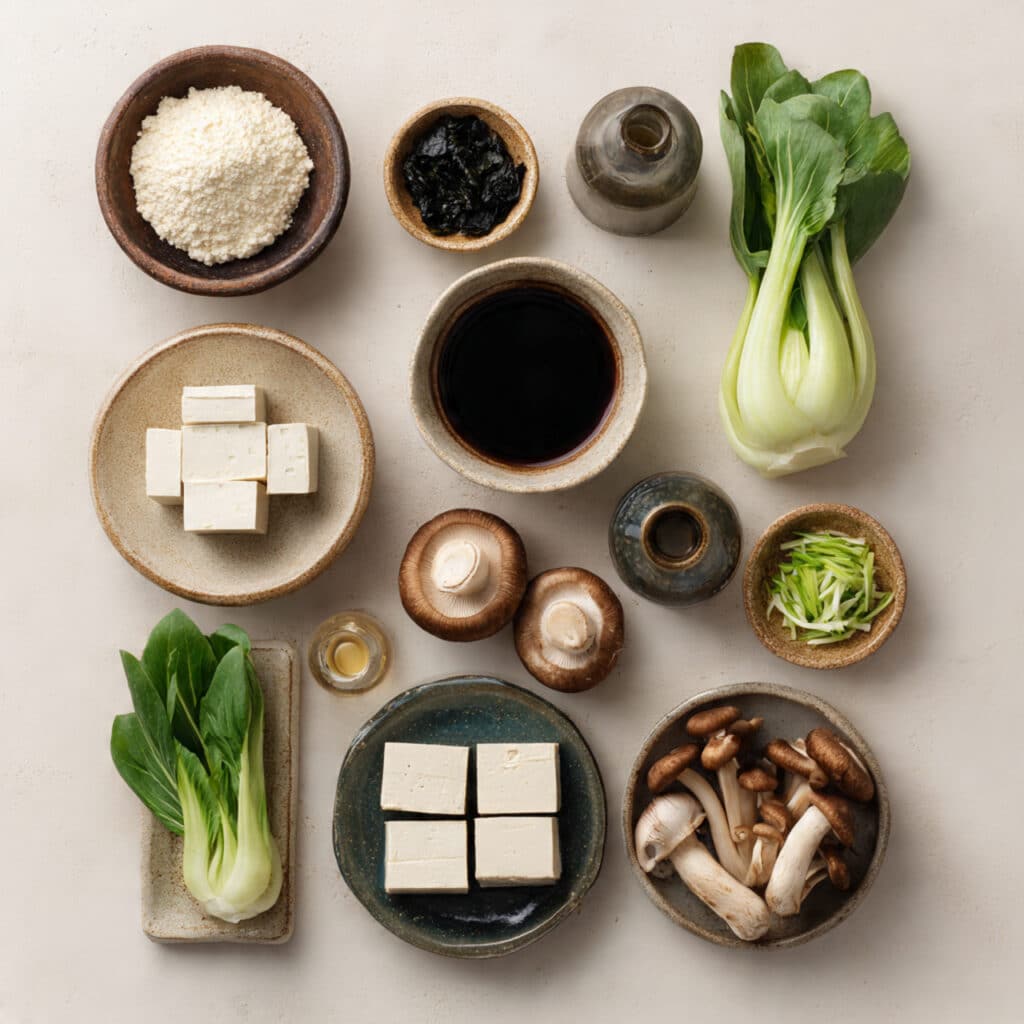
Ingredients in Miso Soup with Tofu
Each component plays its part in creating a beautiful balance of flavor and texture.
- White Miso Paste: 3 tablespoons – The heart of the soup, giving it that deep umami flavor and slight sweetness.
- Soft Tofu: 1 block, cubed – Brings protein and a luscious, creamy bite.
- Dried Seaweed (Wakame): 2 teaspoons – Adds oceanic depth and tender texture.
- Green Onions: 2 stalks, finely sliced – Brightens up the soup and adds crunch.
- Baby Bok Choy: 1 small head, chopped – Optional, but adds a fresh, green element.
- Shiitake Mushrooms: 4, thinly sliced – Give an earthy flavor that complements the miso.
- Soy Sauce: 1 tablespoon – Rounds out the saltiness and deepens the broth.
- Vegetable Broth: 4 cups – Acts as the base to carry all the delicious flavors.
Ingredient Substitutions
Sometimes you have to work with what’s on hand, and that’s totally okay.
White Miso Paste: Yellow miso or red miso will work, but expect a deeper flavor.
Soft Tofu: Silken tofu or even medium-firm tofu if that’s all you have.
Dried Seaweed: Fresh seaweed or nori sheets torn into strips.
Green Onions: Chives or leeks sliced thin.
Baby Bok Choy: Spinach, kale, or napa cabbage.
Shiitake Mushrooms: Cremini or button mushrooms sliced thin.
Vegetable Broth: Dashi for authenticity, or even mushroom broth for extra umami.
Ingredient Spotlight
White Miso Paste: Fermented soybean paste that’s creamy, slightly sweet, and rich in umami. It’s packed with gut-friendly probiotics and gives miso soup its soul.
Tofu: A blank canvas that soaks up the miso flavor, tofu is soft, satisfying, and full of plant-based protein.
Instructions for Making Miso Soup with Tofu
Making this comforting soup is as soothing as eating it. Here’s how you bring it all together.
- Preheat Your Equipment:
Set a medium pot over low to medium heat and have your bowls ready. - Combine Ingredients:
Pour in the vegetable broth and warm gently. Add the sliced mushrooms and rehydrated seaweed, letting them simmer for about 5 minutes. - Prepare Your Cooking Vessel:
In a small bowl, scoop out a ladle of hot broth. Add the miso paste and whisk or stir until fully dissolved. - Assemble the Dish:
Pour the dissolved miso mixture back into the pot. Add tofu cubes, soy sauce, and baby bok choy if using. - Cook to Perfection:
Simmer gently for another 3–4 minutes, making sure not to boil. The tofu should be warmed through, and the greens just wilted. - Finishing Touches:
Stir in the sliced green onions and taste for seasoning. Adjust salt or soy sauce if needed. - Serve and Enjoy:
Ladle into bowls and enjoy warm. This soup is best served immediately, but also reheats beautifully.
Texture & Flavor Secrets
What makes miso soup with tofu truly special is its balance of lightness and depth. The broth is savory, slightly salty, and silky from the dissolved miso. Tofu gives a gentle, creamy bite, while seaweed adds a soft chew and oceanic richness. Mushrooms and greens round out the flavor, creating a warm, nurturing experience in every spoonful.
Cooking Tips & Tricks
A little attention goes a long way with miso soup.
- Always dissolve miso paste in warm broth first to avoid clumps.
- Taste your broth before serving — miso types vary in saltiness.
- If using greens, add them in the last minute to keep them fresh and tender.
What to Avoid
This soup is simple, but a few missteps can dull its beauty.
- Avoid boiling the miso paste directly, which can ruin its flavor and benefits.
- Don’t skip soaking the seaweed — it expands quickly and can become overpowering.
- Don’t use extra firm tofu — it won’t absorb the flavors as well.
Nutrition Facts
Servings: 4
Calories per serving: 120
Note: These are approximate values.
Preparation Time
Prep Time: 10 minutes
Cook Time: 10 minutes
Total Time: 20 minutes
Make-Ahead and Storage Tips
You can easily make the broth ahead of time and store it in the fridge for up to 3 days. Keep tofu and greens separate and add them just before serving to maintain the best texture. Reheat gently without boiling. Miso soup also freezes well — just skip the tofu when freezing and add it fresh when reheating.
How to Serve Miso Soup with Tofu
Serve this soup steaming hot in small bowls alongside sushi, rice, or even dumplings. Garnish with extra green onions or a drizzle of sesame oil for a little twist. It’s a perfect opener or even a light meal all on its own.
Creative Leftover Transformations
Leftover miso soup can become the base of other meals.
- Use it to simmer noodles for a quick lunch.
- Stir in cooked rice and top with a fried egg for a fusion comfort bowl.
- Add sautéed veggies and turn it into a heartier stew.
Additional Tips
- Look for miso paste in the refrigerated section of Asian markets.
- Store leftover miso in an airtight container — it lasts for months.
- Add a dash of chili oil or sesame seeds if you like some kick.
Make It a Showstopper
Serve in elegant Japanese-style bowls with a side of pickled vegetables or a small sushi roll. Top with a swirl of chili oil or sprinkle of toasted sesame seeds to elevate the look. Clean lines and minimal garnish let the rich golden broth shine through.
Variations to Try
- Miso Noodle Soup: Add soba or udon noodles for a more filling version.
- Spicy Miso Soup: Stir in a teaspoon of chili paste or sriracha.
- Miso Soup with Corn: A sweet twist by adding fresh or frozen corn.
- Miso Ramen Style: Add nori strips and boiled eggs for a ramen-like experience.
- Creamy Coconut Miso Soup: Mix in coconut milk for a Thai-Japanese fusion.
FAQ’s
Q1: Can I make this without tofu?
A1: Yes, just skip it or replace with mushrooms or greens for texture.
Q2: Is miso soup vegan?
A2: This version is completely vegan, as it uses vegetable broth instead of traditional dashi.
Q3: Can I use red miso paste?
A3: Yes, but it will result in a stronger, saltier flavor. Adjust quantity to taste.
Q4: How do I store leftover miso soup?
A4: Store in an airtight container in the fridge for up to 3 days. Reheat gently.
Q5: Can I freeze miso soup?
A5: Yes, but freeze without tofu or greens for best texture. Add them fresh when reheating.
Q6: What’s the difference between white and red miso?
A6: White miso is milder and slightly sweet, while red miso is stronger and saltier.
Q7: Can I add protein like chicken or shrimp?
A7: Yes, but be sure to cook it separately and stir it in just before serving.
Q8: Is miso soup good for digestion?
A8: Absolutely. The probiotics in miso are great for gut health.
Q9: Where can I buy miso paste?
A9: Most grocery stores carry it in the refrigerated section or international aisle.
Q10: What type of seaweed is best?
A10: Dried wakame is ideal. It rehydrates quickly and has a pleasant texture.
Conclusion
Whether you’re sipping this miso soup alone on a quiet afternoon or sharing it with loved ones before a big meal, its warmth and simplicity never disappoint. With just a few fresh ingredients and a bit of care, you’ll have a soothing, nourishing bowl that feels like home. Trust me, you’re going to love this.
Print
Miso Soup with Tofu
- Total Time: 20 minutes
- Yield: 4 servings
- Diet: Vegan
Description
A cozy and comforting Japanese classic, this Miso Soup with Tofu is loaded with umami from white miso paste, soft tofu, and seaweed, brought to life with a touch of soy sauce and fresh green onions. Ready in just 20 minutes, it’s perfect as a starter or light meal.
Ingredients
- 3 tablespoons white miso paste
- 1 block soft tofu, cubed
- 2 teaspoons dried seaweed (wakame)
- 2 stalks green onions, finely sliced
- 1 small head baby bok choy, chopped (optional)
- 4 shiitake mushrooms, thinly sliced
- 1 tablespoon soy sauce
- 4 cups vegetable broth
Instructions
- Set a medium pot over low to medium heat and warm the vegetable broth.
- Add sliced mushrooms and soaked seaweed to the pot and let them simmer for 5 minutes.
- In a separate bowl, scoop out a ladle of hot broth and dissolve the miso paste in it. Stir until smooth.
- Pour the miso mixture back into the pot, then add tofu cubes, soy sauce, and baby bok choy if using.
- Simmer gently for 3–4 minutes, making sure not to boil.
- Stir in sliced green onions, taste, and adjust seasoning if needed.
- Ladle into bowls and serve hot.
Notes
- Never boil miso paste directly to preserve its flavor and probiotics.
- Use silken or soft tofu for the best texture.
- Rehydrate seaweed separately before adding to the soup.
- Prep Time: 10 minutes
- Cook Time: 10 minutes
- Category: Soup
- Method: Simmering
- Cuisine: Japanese
Nutrition
- Serving Size: 1 bowl
- Calories: 120
- Sugar: 2g
- Sodium: 640mg
- Fat: 5g
- Saturated Fat: 1g
- Unsaturated Fat: 4g
- Trans Fat: 0g
- Carbohydrates: 10g
- Fiber: 2g
- Protein: 8g
- Cholesterol: 0mg