Ginger Soy Glazed Halibut Recipe
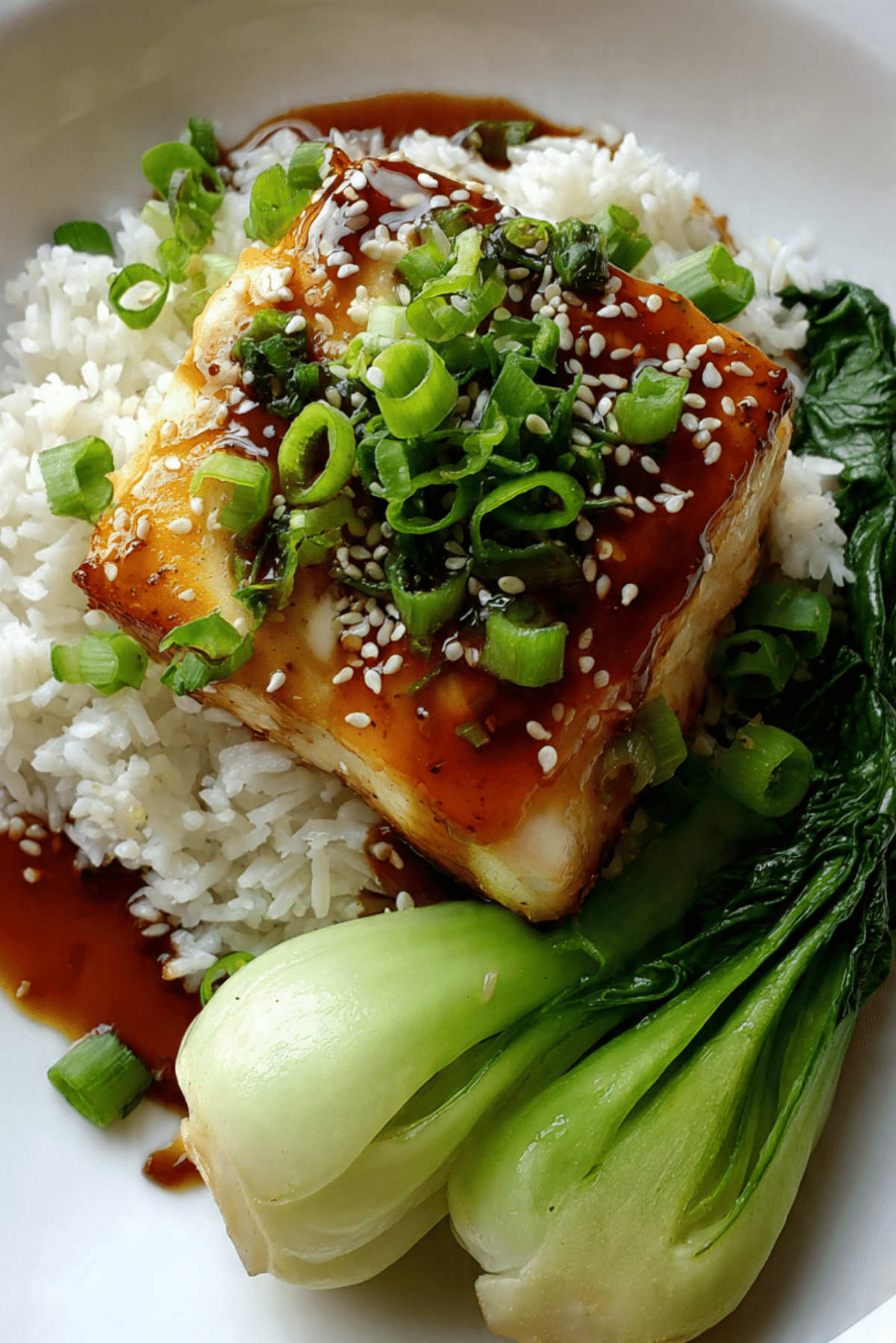
There’s something comforting yet undeniably elegant about a perfectly cooked piece of halibut kissed with a glossy ginger soy glaze. The way the savory-sweet sauce clings to the tender white fish, paired with aromatic rice and a bite of bright bok choy, makes this dish feel like a restaurant-level meal you can enjoy right at home. It’s one of those recipes that brings both calm and celebration to the dinner table.
Why This Dish Steals the Spotlight Every Time
From the very first bite, this glazed halibut offers that beautiful balance of flavors. The umami from the soy sauce meets the zing of fresh ginger and garlic, softened by honey and deepened with sesame oil. It’s light yet deeply satisfying, perfect for when you want something wholesome that still feels indulgent.
The Story Behind This Flavorsome Favorite
Inspired by classic Asian flavor pairings, the idea of glazing fish with a soy and ginger reduction dates back centuries in Japanese and Chinese home cooking. The use of halibut, a flaky white fish, elevates the experience, bringing a modern twist to a timeless flavor profile. This dish draws from the simplicity of home kitchens and the finesse of refined cuisine.
What Makes This Halibut Dish a Must-Try
There are a lot of reasons this dish might just end up on your weekly rotation. Let’s break it down:
Versatile: Serve it with rice, noodles, or even lettuce wraps for a low-carb take. It works for lunch, dinner, or a date night meal.
Budget-Friendly: Halibut is a bit of a splurge, but this recipe maximizes flavor with simple pantry staples.
Quick and Easy: From fridge to plate in under 30 minutes.
Customizable: Adjust sweetness, spice, or swap in another white fish like cod.
Crowd-Pleasing: That glossy glaze has everyone going in for seconds.
Make-Ahead Friendly: The glaze can be prepped days in advance.
Great for Leftovers: Cold halibut on a salad the next day? Yes, please.
Let’s Talk Technique: Pro Tips for a Perfect Glaze and Cook
A few insider moves can make all the difference with a dish like this. Here’s how to get that flawless finish:
- Pat the fish dry before searing to get that golden crust and avoid steaming it.
- Don’t over-reduce the glaze. It should lightly coat the back of a spoon, not turn into syrup.
- Use a nonstick or well-seasoned pan to keep the fish from tearing.
- Rest the fish briefly before serving to let juices settle.
- Drizzle glaze right before serving so the fish stays glossy and not soggy.
The Tools That Make This Dish a Breeze
No need to pull out anything fancy here, but a few key tools help nail the result:
Nonstick Skillet: Ideal for delicate fish fillets.
Microplane or Grater: Makes prepping ginger and garlic quick and fine.
Small Saucepan: For reducing the glaze gently.
Fish Spatula: Thin enough to flip the halibut without breaking it.
Rice Cooker or Pot: To make perfectly fluffy jasmine rice.
Ingredients You’ll Need to Bring It All Together
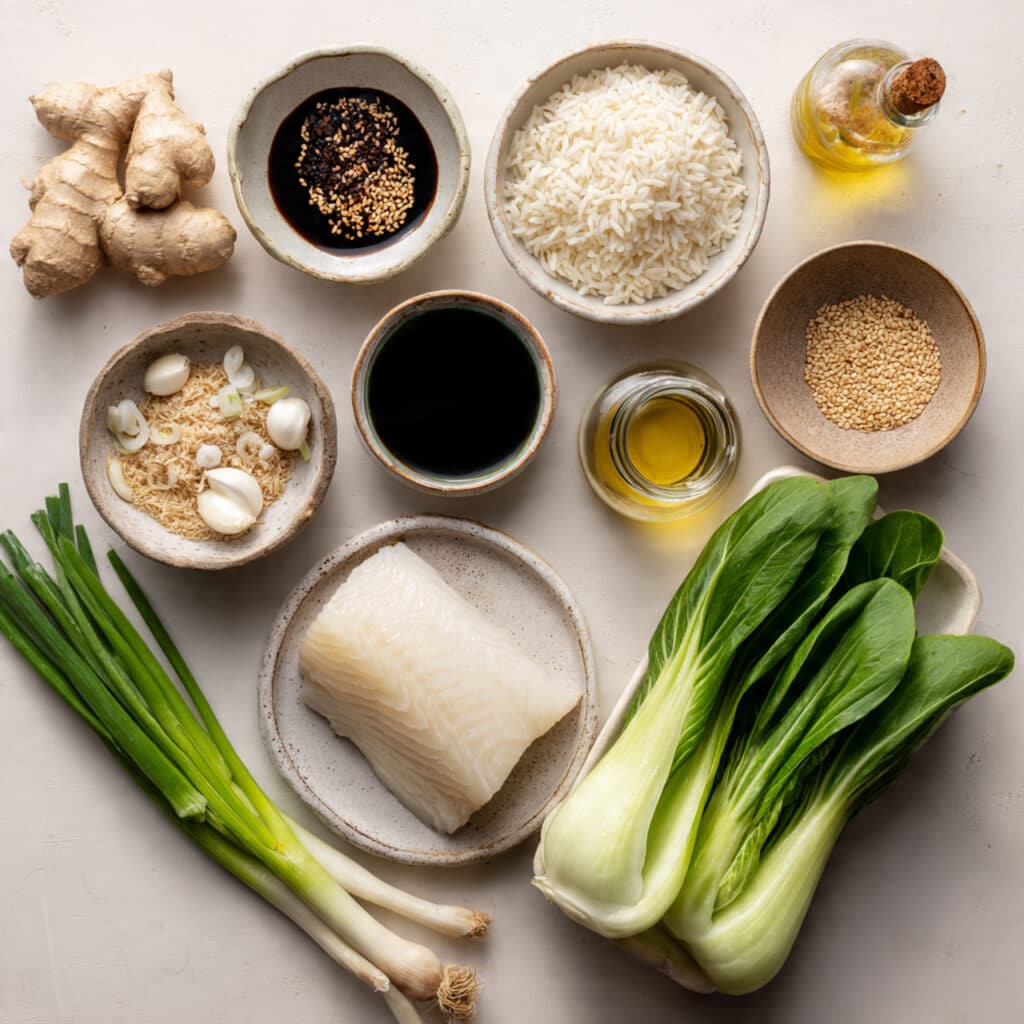
There’s a beautiful simplicity to how these ingredients work in harmony. Each one plays its part in creating layers of flavor and texture.
- Halibut Fillets: 4 fillets (about 6 oz each), skinless and boneless. They’re mild, flaky, and ideal for soaking up the glaze.
- Soy Sauce: 1/3 cup. The savory backbone of the glaze.
- Honey: 2 tablespoons. Adds a touch of sweetness to balance the soy.
- Fresh Ginger: 1 tablespoon, grated. Brings warm spice and brightness.
- Garlic: 2 cloves, minced. Adds aromatic depth.
- Rice Vinegar: 1 tablespoon. Brightens the sauce with acidity.
- Sesame Oil: 1 teaspoon. A finishing touch that adds toasty aroma.
- Green Onions: 2 stalks, finely chopped. For a pop of freshness.
- Sesame Seeds: 1 teaspoon. Adds nutty texture.
- Jasmine Rice: 1 cup uncooked. Fluffy and fragrant pairing.
- Bok Choy: 2 heads, halved and steamed. Light, crisp, and green.
Ingredient Swaps That Work Beautifully
You can still enjoy the same comforting experience with a few smart swaps.
Halibut: Cod or sea bass.
Soy Sauce: Tamari for gluten-free.
Honey: Maple syrup or agave nectar.
Rice Vinegar: Apple cider vinegar.
Bok Choy: Spinach or napa cabbage.
Jasmine Rice: Brown rice or cauliflower rice.
Hero Ingredients That Carry the Flavor
Fresh Ginger: It brings a lively zing that cuts through the richness of the glaze.
Halibut: A buttery texture that pairs perfectly with the sauce’s sweet-salty balance.
Ready to Cook? Let’s Do This Together
Cooking this dish feels like a meditative ritual. Here’s how we do it, step by step.
1. Preheat Your Equipment:
Start by heating your nonstick skillet over medium-high heat and your steamer for the bok choy. Also, begin cooking your jasmine rice in a pot or rice cooker.
2. Combine Ingredients:
In a small saucepan, mix soy sauce, honey, ginger, garlic, rice vinegar, and sesame oil. Simmer on low heat until slightly thickened, about 5–7 minutes.
3. Prepare Your Cooking Vessel:
Add a light drizzle of oil to the hot skillet and pat your halibut dry with paper towels. This helps get that perfect sear.
4. Assemble the Dish:
Place halibut fillets in the skillet and cook for 3–4 minutes per side until golden and flaky. Steam the bok choy at the same time.
5. Cook to Perfection:
Brush the glaze over the cooked halibut, allowing it to bubble slightly in the pan. Let it coat the fish evenly.
6. Finishing Touches:
Sprinkle sesame seeds and green onions over the glazed fish. Fluff your rice and plate it with the halibut and bok choy.
7. Serve and Enjoy:
Serve hot with an extra drizzle of glaze on the rice or bok choy if desired.
When Texture Meets Taste: A Delicious Duo
The halibut is tender with a hint of crisp at the edges. The glaze is sticky-silky, while the rice is soft and fluffy. Then comes the bok choy — crisp and bright — giving the whole plate a balance of rich, savory, fresh, and light.
Keep These Handy Tips in Your Apron Pocket
Every good cook needs a few tricks. Here are some to help you win dinner:
- Let the fish come to room temperature before cooking for even heat.
- Always grate ginger and garlic fresh — it makes all the difference.
- Don’t skip resting the glaze after cooking. It thickens beautifully.
Avoid These Common Pitfalls
Even seasoned home cooks slip up sometimes. Here’s what to watch for:
- Overcooking the fish: It should flake easily, not feel dry.
- Too thick a glaze: If over-reduced, it’ll turn into candy.
- Skipping the drying step: Moisture on the fish will stop it from browning.
Nutrition Breakdown
Servings: 4
Calories per serving: 365
Note: These are approximate values.
Timing is Everything
Prep Time: 10 minutes
Cook Time: 15 minutes
Total Time: 25 minutes
Smart Storage and Make-Ahead Tips
You can prepare the glaze up to 3 days in advance and store it in the fridge. Cooked halibut keeps well in an airtight container for 2 days. Reheat gently or serve chilled over greens. The rice and bok choy can be made ahead and stored separately.
How to Plate It for the Perfect Bite
Serve the glazed halibut over a small mound of jasmine rice, tucking the bok choy on the side. Garnish with extra green onions and sesame seeds for color and crunch. It also pairs nicely with a chilled cucumber salad or miso soup.
Get Creative with Your Leftovers
Here’s where you can have fun:
- Flake leftover halibut into rice bowls with fresh veggies.
- Make halibut tacos with a spicy slaw.
- Toss over cold noodles with extra glaze and sesame oil.
Bonus Tips for Extra Flavor
- Use toasted sesame seeds for deeper flavor.
- Add a pinch of chili flakes if you like a bit of heat.
- Splash in a touch of lime juice at the end for brightness.
Make It a Showstopper on the Table
Use a clean white plate to let the glaze shine. Arrange the bok choy in a fan shape, and drizzle glaze in a zigzag over the rice for that chef-y touch. A few edible flowers or microgreens? Even better.
Variations Worth Trying
- Miso-Twist: Add a teaspoon of white miso to the glaze.
- Citrus Kick: Replace vinegar with orange juice for a citrusy glaze.
- Spicy Version: Stir in a teaspoon of chili garlic sauce.
- Noodle Swap: Serve over soba or ramen instead of rice.
- Teriyaki Fusion: Add a dash of mirin for a Japanese-style spin.
FAQ’s
Q1: Can I use frozen halibut?
Yes, just thaw it completely and pat dry before cooking.
Q2: What can I use instead of bok choy?
Try spinach, napa cabbage, or even sautéed kale.
Q3: Is this dish gluten-free?
Use tamari instead of soy sauce and you’re good to go.
Q4: Can I bake the halibut instead?
Absolutely. Bake at 400°F for 10–12 minutes and glaze afterward.
Q5: What wine pairs well with this?
A crisp white like Sauvignon Blanc or a light Pinot Grigio.
Q6: How do I know when the fish is done?
It should flake easily with a fork and appear opaque.
Q7: Can I double the glaze?
Yes, and you can store leftovers for up to a week in the fridge.
Q8: Is this dish kid-friendly?
The sweet glaze makes it very approachable for kids.
Q9: Can I add vegetables to the pan?
Totally! Bell peppers or snow peas would be great.
Q10: How spicy is this?
It’s mild, but you can add heat with chili flakes or hot sauce.
Conclusion
This ginger soy glazed halibut is more than just a weeknight dinner. It’s that go-to dish when you want something that feels special without the stress. Light, flavorful, and full of texture, it’s one of those meals you’ll look forward to making again and again. Trust me, it’s worth every bite.
Print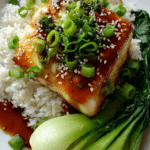
Ginger Soy Glazed Halibut Recipe
- Total Time: 25 minutes
- Yield: 4 servings
- Diet: Low Fat
Description
A tender halibut fillet glazed with a savory-sweet ginger soy sauce, served with jasmine rice and steamed bok choy. A quick and elegant dish perfect for any night.
Ingredients
- 4 halibut fillets (about 6 oz each), skinless and boneless
- 1/3 cup soy sauce
- 2 tablespoons honey
- 1 tablespoon fresh ginger, grated
- 2 garlic cloves, minced
- 1 tablespoon rice vinegar
- 1 teaspoon sesame oil
- 2 green onions, finely chopped
- 1 teaspoon sesame seeds
- 1 cup jasmine rice, uncooked
- 2 heads bok choy, halved and steamed
Instructions
- Heat a nonstick skillet over medium-high heat and prepare a steamer for the bok choy. Start cooking jasmine rice in a rice cooker or pot.
- In a small saucepan, combine soy sauce, honey, ginger, garlic, rice vinegar, and sesame oil. Simmer on low for 5–7 minutes until slightly thickened.
- Drizzle a bit of oil into the hot skillet and pat halibut fillets dry with paper towels.
- Place halibut fillets in the skillet and cook for 3–4 minutes per side until golden and flaky. Steam bok choy simultaneously.
- Brush the glaze over the cooked halibut, letting it bubble slightly to coat the fish evenly.
- Sprinkle sesame seeds and green onions on top. Plate halibut with jasmine rice and bok choy.
- Serve immediately with optional extra glaze over rice or bok choy.
Notes
- Grate ginger and garlic fresh for the best flavor boost.
- Don’t over-reduce the glaze—it should lightly coat the back of a spoon.
- Leftover glaze keeps well in the fridge for up to a week.
- Prep Time: 10 minutes
- Cook Time: 15 minutes
- Category: Dinner
- Method: Pan-Sear
- Cuisine: Asian-Inspired
Nutrition
- Serving Size: 1 fillet with rice and bok choy
- Calories: 365
- Sugar: 7g
- Sodium: 880mg
- Fat: 8g
- Saturated Fat: 1g
- Unsaturated Fat: 6g
- Trans Fat: 0g
- Carbohydrates: 35g
- Fiber: 2g
- Protein: 34g
- Cholesterol: 65mg